Most people learn bike maintenance one of two ways: not at all, or by trying to absorb everything at once from a YouTube binge the night before a trip. Neither works well. There's a real order to this, and it's shorter than it looks.
First: keep the chain clean and lubed
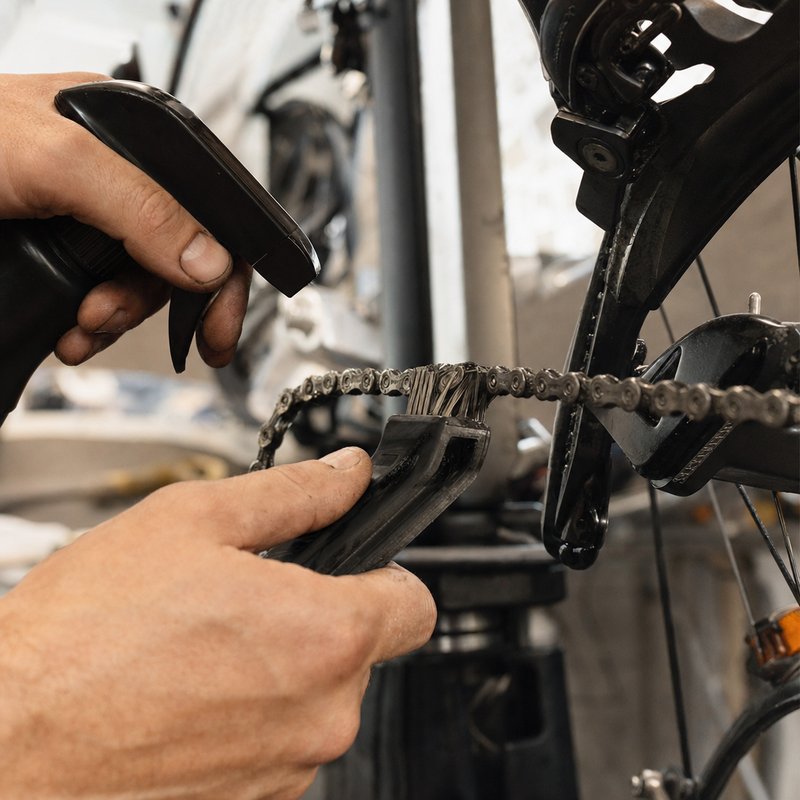
This is the single highest-value habit in bike maintenance, and it's also the cheapest — a rag, degreaser and chain lube, nothing else. A clean, lubed chain shifts better, lasts longer, and quietly prevents most of the "why does my bike sound awful" problems before they start. See our chain-cleaning guide for the actual steps.
Second: know what your brakes should feel like
You don't need to be able to rebuild a brake caliper. You do need to know what "correct" feels like at the lever, so you notice immediately when it changes — see our brake-adjustment guide for the full procedure once something actually feels off.
The goal isn't becoming a mechanic. It's noticing a problem while it's still a five-minute fix instead of a shop bill.

Third: be able to actually fix a flat
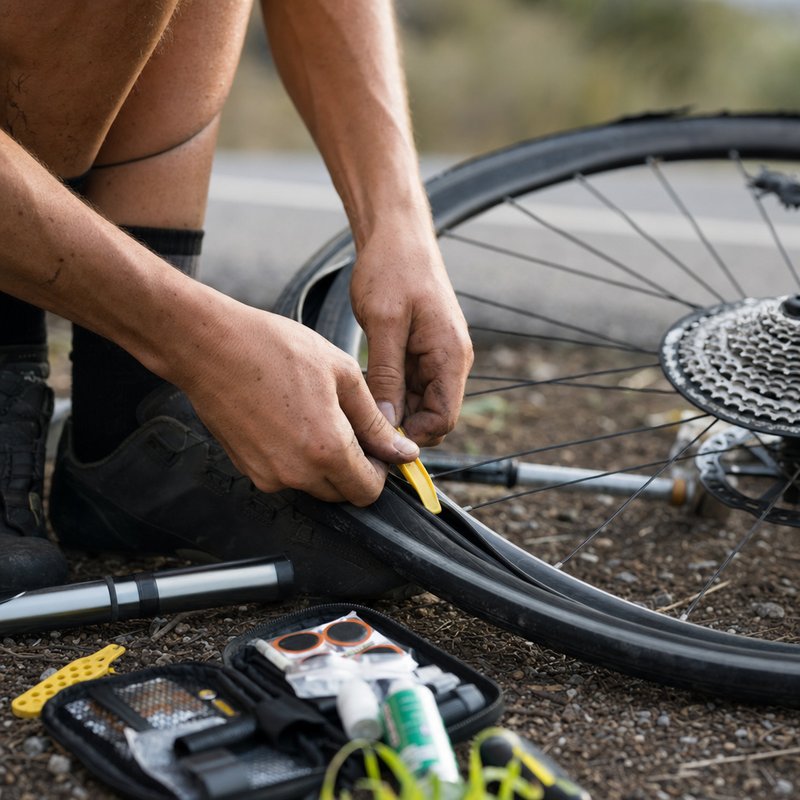
This is the one skill on this list that turns a ride-ending problem into a ten-minute delay instead of a phone call home. It's also the most commonly skipped, because it feels intimidating until you've done it once with someone who already knows how. Learn it in a driveway before you need it on a roadside — see our flat-tire guide for the full walkthrough, tire levers included.
Why this order, specifically
Chain care comes first because it's cheap, constant, and prevents wear that would otherwise cost real money down the line — cassette and chainring replacement is a bigger bill than a bottle of degreaser. Brake awareness comes second because it's a safety issue, not a convenience one, and it takes almost no mechanical skill to notice a lever that's started pulling further than it used to. A flat-tire fix comes third specifically because it's the one skill you can't substitute with "just be more careful" — tires puncture regardless of how well you maintain everything else, so it's worth knowing cold rather than learning it improvised on the side of a road.
When to stop and pay a shop
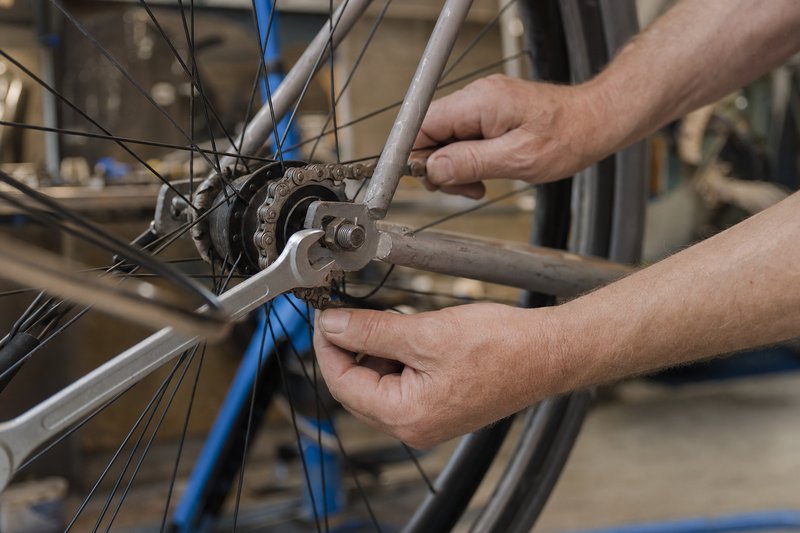
Wheel truing, headset and bottom-bracket bearing service, and anything involving a hydraulic brake bleed are all genuinely worth a shop visit unless you're already committed to learning them properly with the right tools. A professional tune-up covers exactly this tier of work, and paying for it isn't a failure of self-sufficiency — it's the same reasoning that has most car owners change their own oil but not their own transmission.
The dividing line isn't really about difficulty, it's about the cost of getting it wrong and the tooling required to do it right the first time. A misadjusted brake lever is annoying but recoverable in seconds; a wheel trued slightly wrong, or bearings pressed in at an angle, can shorten the life of an expensive part or make the bike genuinely unsafe. None of those jobs are secret knowledge reserved for professionals — they're just jobs where the right specialized tool (a truing stand, a bearing press) makes the difference between a five-minute job and an afternoon of frustration with a workaround that half-works.
A couple of things people ask
Do I need a full home workshop to start?
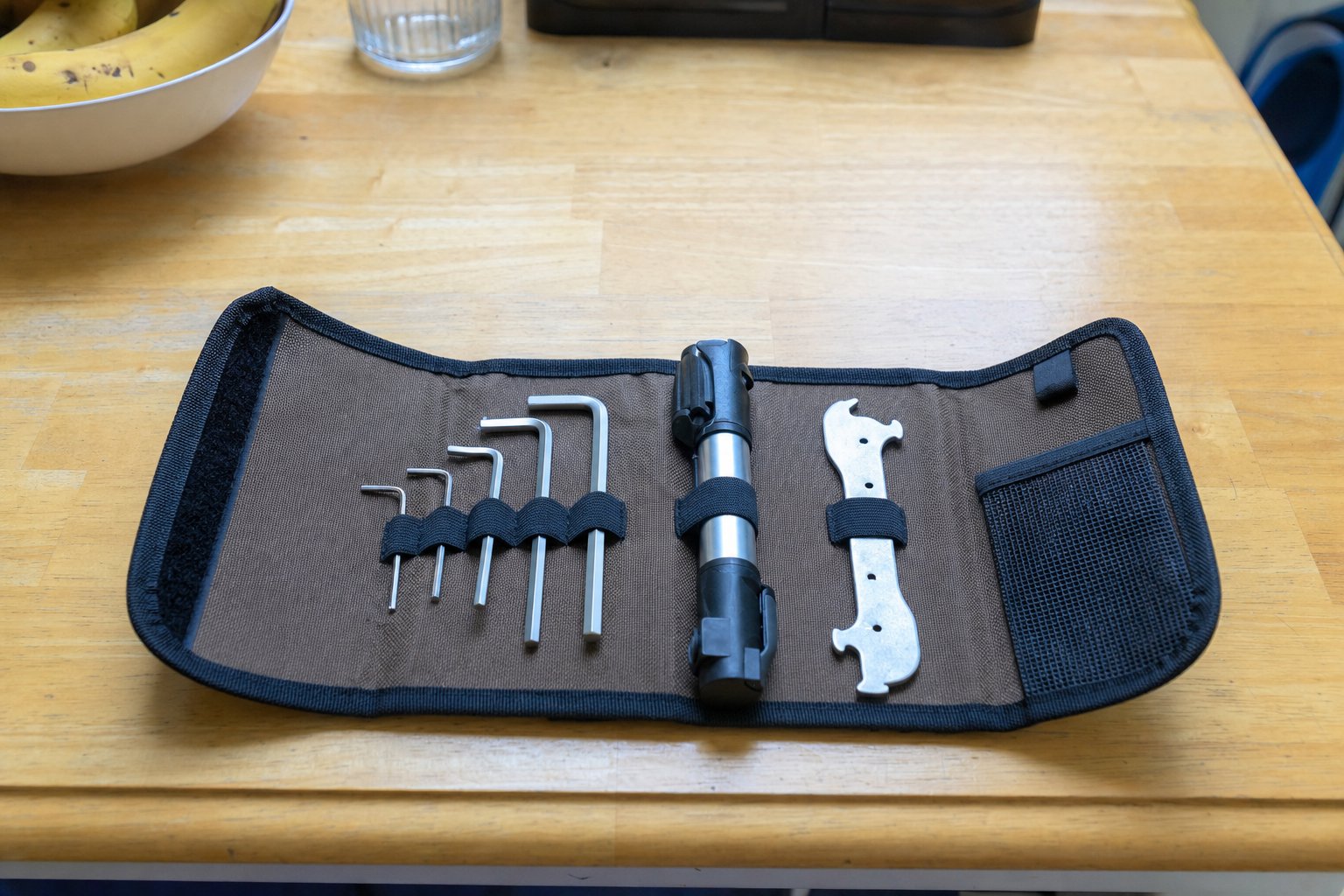
No. A set of Allen keys, a mini pump with a pressure gauge, a chain-wear checker and basic degreaser/lube covers everything in the checklist above. A repair stand is genuinely useful but not required to start.
How often should I actually do all of this?
Tire pressure before any ride that matters, a spin-and-listen check monthly, chain cleaning roughly every 100-200 miles depending on conditions, and a wear check every few months. None of it needs a strict schedule — it needs to become a habit you do without thinking about it.