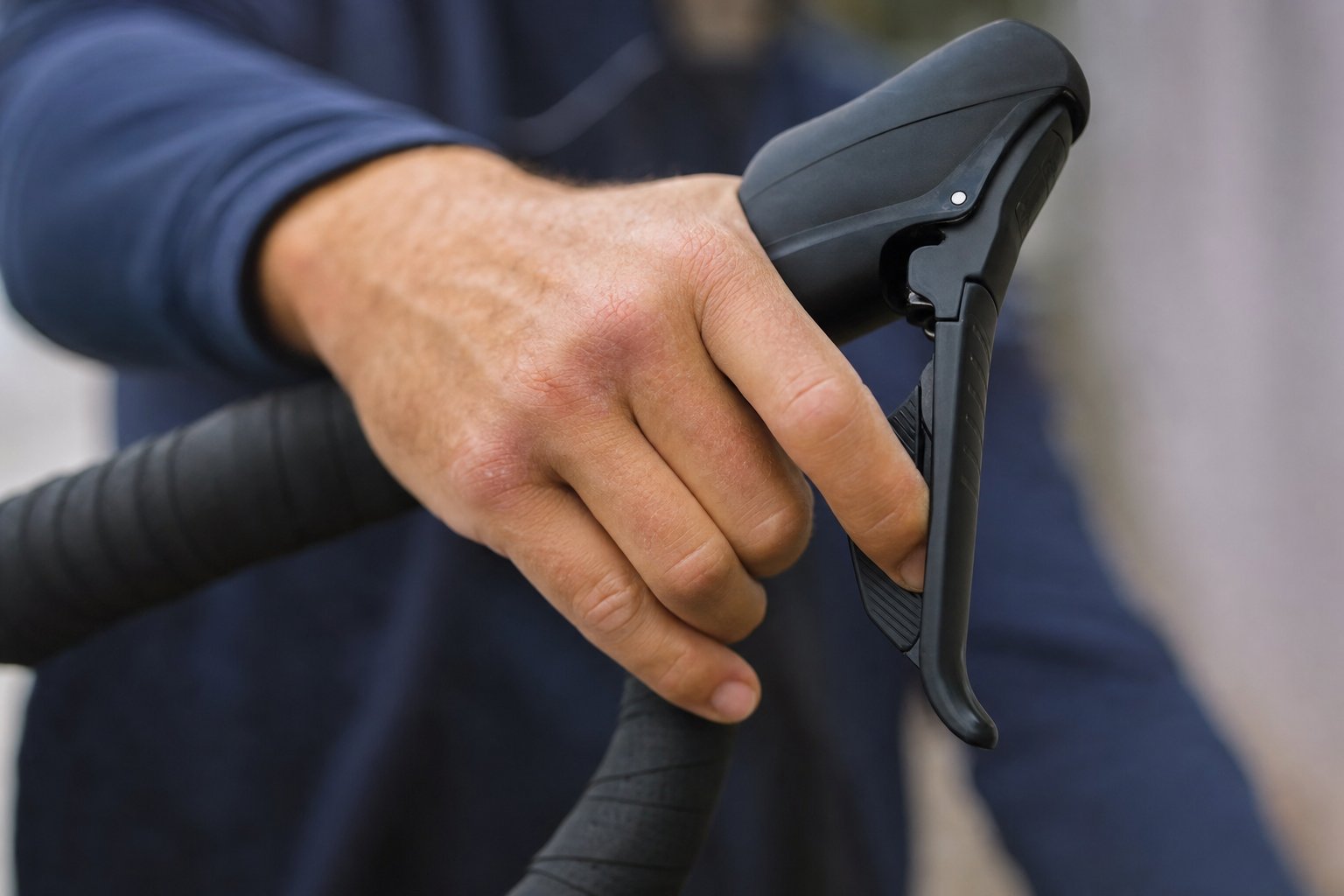
If the brake lever pulls almost to the handlebar before the brake does anything, that's a cable-tension problem, and it's usually a one-minute fix — as long as your bike's brakes actually use a cable in the first place.
The quick fix: the barrel adjuster
The barrel adjuster is the small knurled cuff where the brake cable enters the lever (or sometimes at the caliper). Turning it counter-clockwise takes up slack and tightens the brake; clockwise loosens it. This works on rim brakes and mechanical (cable-actuated) disc brakes — turn it a quarter turn at a time and test the lever feel before adjusting further.
What "correctly tightened" actually feels like
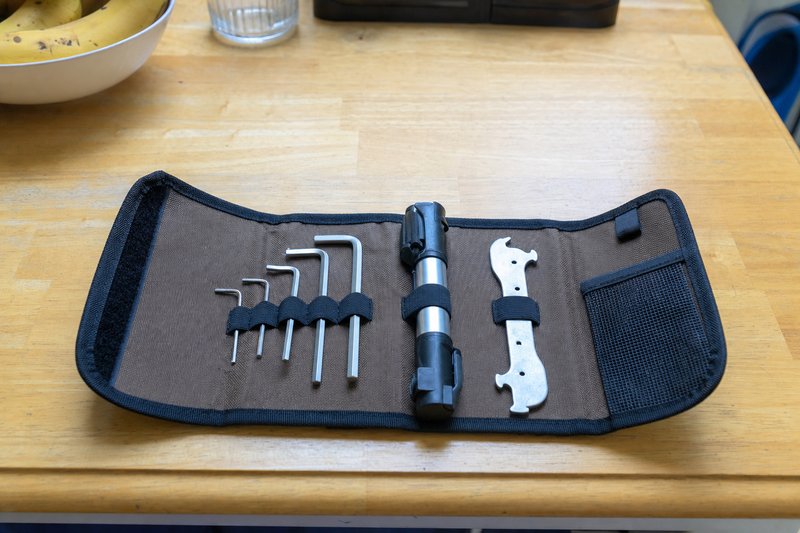
The lever should engage firmly after roughly one to one-and-a-half inches of pull — enough travel to modulate the brake smoothly, not so little that it's grabby, not so much that it bottoms out against the bar before it bites. If the barrel adjuster runs out of thread before the feel is right, that's the sign to make a bigger adjustment at the caliper itself: loosen the cable-pinch bolt with an Allen key, pull the housing through by hand to remove the remaining slack, and re-tighten the bolt.
Hydraulic disc brakes don't have a cable to tighten — a loose hydraulic lever means something else needs attention, not a barrel adjuster.

Hydraulic disc brakes: a different system entirely
Hydraulic disc brakes use sealed fluid, not a cable, to transmit lever force — there's no barrel adjuster and nothing to "tighten" in the same sense. A hydraulic lever that feels loose or spongy almost always means air in the line (needs bleeding) or worn-down pads reducing the lever's effective travel, not a tension adjustment. If your bike has hydraulic brakes and the lever feels wrong, that's a bleed-or-pads problem, and forcing a cable-style fix onto it won't do anything because there's no cable there to move.
Why brakes loosen in the first place
A brand-new cable stretches slightly as it beds in, and cable housing compresses a small amount under normal use — neither is a fault, it's just what happens to new parts in the first weeks of riding. That's the most common reason a barrel adjuster that was set correctly a month ago now needs another quarter-turn. Pad wear does the same thing more slowly: as the pad material thins, the lever has to travel further before the pad reaches the rim or rotor, which reads exactly like a loose cable even though nothing has actually slipped.
Rim brakes add one more variable worth knowing about: the pads themselves can be adjusted toward or away from the rim independently of cable tension, using the small bolt that holds each pad arm. If one pad sits noticeably closer to the rim than the other, that's a pad-position issue to fix before touching the barrel adjuster — tightening the cable to compensate for a misaligned pad just masks the real problem and can make the brake grab unevenly.
When it's the cable itself, not the tension
A barrel adjuster can only take up so much slack before it's fighting a cable that's genuinely stretched past a reasonable working range, or housing that's cracked, kinked, or full of grit. Frayed strands visible at the cable end, a cable that feels gritty or stiff when the lever is pulled, or housing with a visible kink are all signs the part itself needs replacing rather than adjusting — no amount of barrel-adjuster turning fixes a cable that's mechanically worn out. This is also the point where a full-tension reset at the caliper pinch bolt, not just the barrel adjuster, is worth doing properly rather than chasing a few more millimeters of slack with the small adjuster alone.
Always finish with a spin test
After any adjustment, lift the wheel and spin it by hand. It should turn freely with no rubbing or drag from the pads — a brake tightened too far will drag constantly, wasting effort and wearing the pads down for no reason. If you hear or feel drag, back the barrel adjuster off slightly and re-check.
A couple of things people ask
How do I know if my brakes are rim, mechanical disc, or hydraulic disc?
Look at where the cable or hose goes. A cable housing running all the way to a disc caliper means mechanical disc — a barrel adjuster works. A sealed hose with no visible cable means hydraulic — it doesn't.
My barrel adjuster is already screwed all the way in — now what?
That means the cable itself has stretched or the pads have worn down enough that the barrel adjuster's small range of travel isn't enough anymore. Screw it back out to its middle position first, then make the bigger adjustment at the caliper pinch bolt as described above.