Here's how to clean a bike chain properly, the same way a shop mechanic would — done right, in about five minutes. A dirty chain doesn't just look bad — it wears out your cassette and chainrings faster than almost anything else on the bike. The fix takes less time than making coffee, and once you've followed this guide once, you'll never go back to wiping it with an old rag and calling it done.
How to Clean a Bike Chain: A Step-by-Step Guide
Four steps, done in order, cover it every time — degrease, scrub, dry, then lubricate. Skipping the order (lubricating a chain that's still wet from degreaser, say) is the most common way this goes wrong.
Shift to the smallest cog and apply degreaser
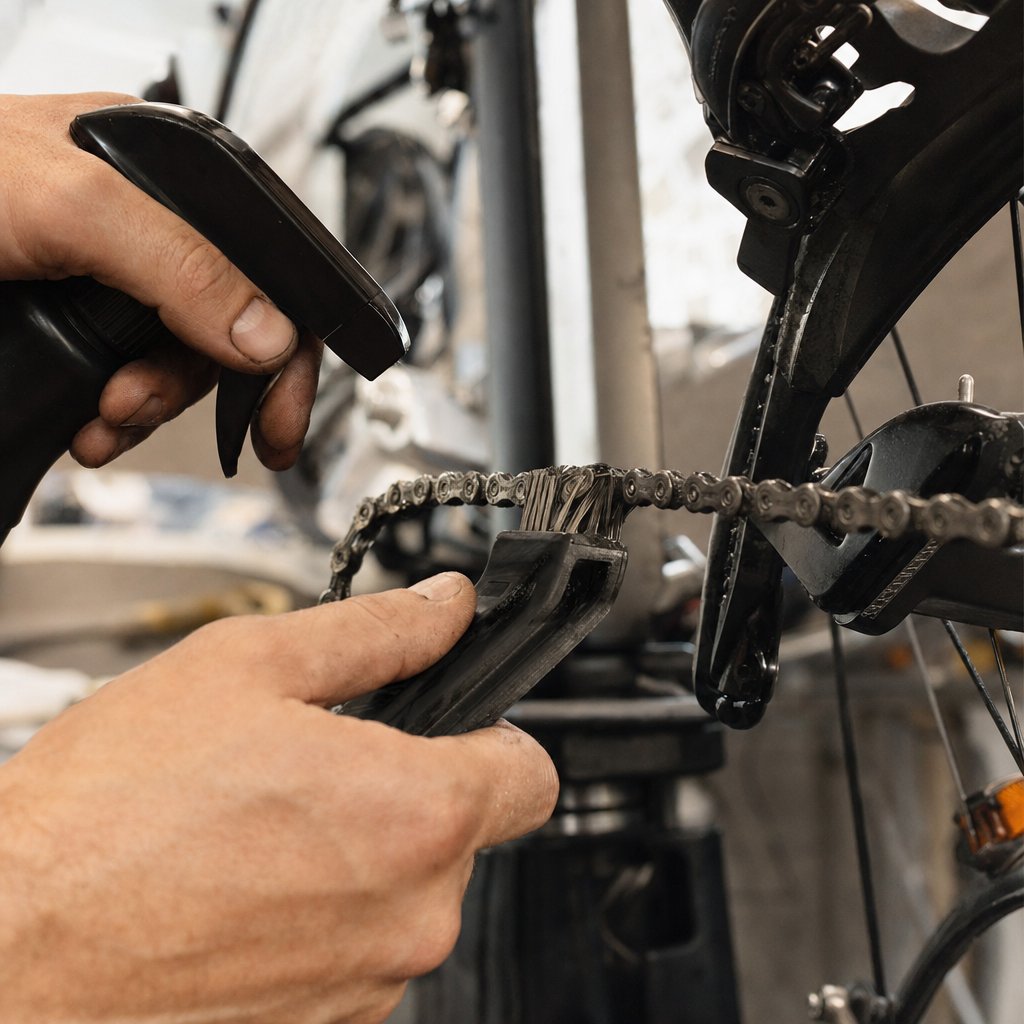
Put the chain on the smallest rear cog so it's easier to work the pedals backward by hand. Spray or drip degreaser directly onto the chain as you turn the pedals, working it into every link — not just the outer plates. The goal at every step is the same: clean a bike chain thoroughly enough that no grinding paste survives between the rollers.

Scrub with a chain-specific brush
A stiff-bristled chain brush gets into the rollers in a way a sponge never will. Work it around the whole chain while backpedaling, focusing on the areas that pick up the most road grime — usually the underside.

"Clean" doesn't mean shiny. It means no grinding paste left between the links — that's the part that actually eats your drivetrain.
Wipe down and let it dry fully
A clean rag pulled through the chain a few times removes the loosened grime and leftover degreaser. Don't skip drying time — lubricant applied over a damp chain just traps moisture where you don't want it.

Apply lubricant, one drop per link
More isn't better here — a single drop per link, worked in by backpedaling, then a final wipe of the excess off the outside. Excess lube just attracts more dirt, which defeats the entire point of cleaning it.

Wet lube or dry lube — pick for the conditions, not the shelf
This is the one decision that matters more than the brand you buy. Dry lube goes on wet but cures into a waxy, low-tack film that doesn't hold onto dust and grit — the right choice for dry, dusty conditions where the main enemy is abrasive grime sticking to a wet chain. Wet lube stays tacky and displaces water far better, which is what you actually need riding in rain or through standing water, at the cost of picking up more road grime between cleans.
Running wet lube in dry, dusty conditions is the most common mismatch — it turns into a black paste within a couple of rides because dust has something to stick to. If your chain seems to get filthy unusually fast between cleans, check that the lube you're using actually matches the conditions you're riding in before assuming you're just cleaning it wrong.
None of that matters if you don't already know how to clean a bike chain in the first place, though — lubricant is the last step in this guide, never a substitute for the first four.
A couple of things people ask
How often should I actually do this?
Roughly every 150-200 miles in dry conditions, sooner if you've ridden through mud, sand or rain. If the chain sounds noisy or looks visibly black with grime, that's your answer regardless of mileage.
Can I just use a bike-specific spray-on cleaner instead of degreaser and a brush?
Spray cleaners work fine for light upkeep between proper cleans, but they don't replace a real degrease every so often — grime builds up inside the rollers where a spray-and-wipe never reaches.
Do I need to remove the chain to clean it properly?
No — on-bike cleaning with degreaser and a brush reaches everything that actually matters for most riders. Removing the chain for a full soak-clean is only worth the extra hassle if it's been badly neglected for a long stretch, and even then a quick-link makes it a five-minute job rather than a real teardown.
What should I do with the used degreaser and dirty rags?
Don't hose degreaser runoff straight down a storm drain — it's the same reason motor-oil disposal rules exist. Wipe up what you can with rags and let the rest evaporate on cardboard or dispose of it the way your local rules handle used solvents.