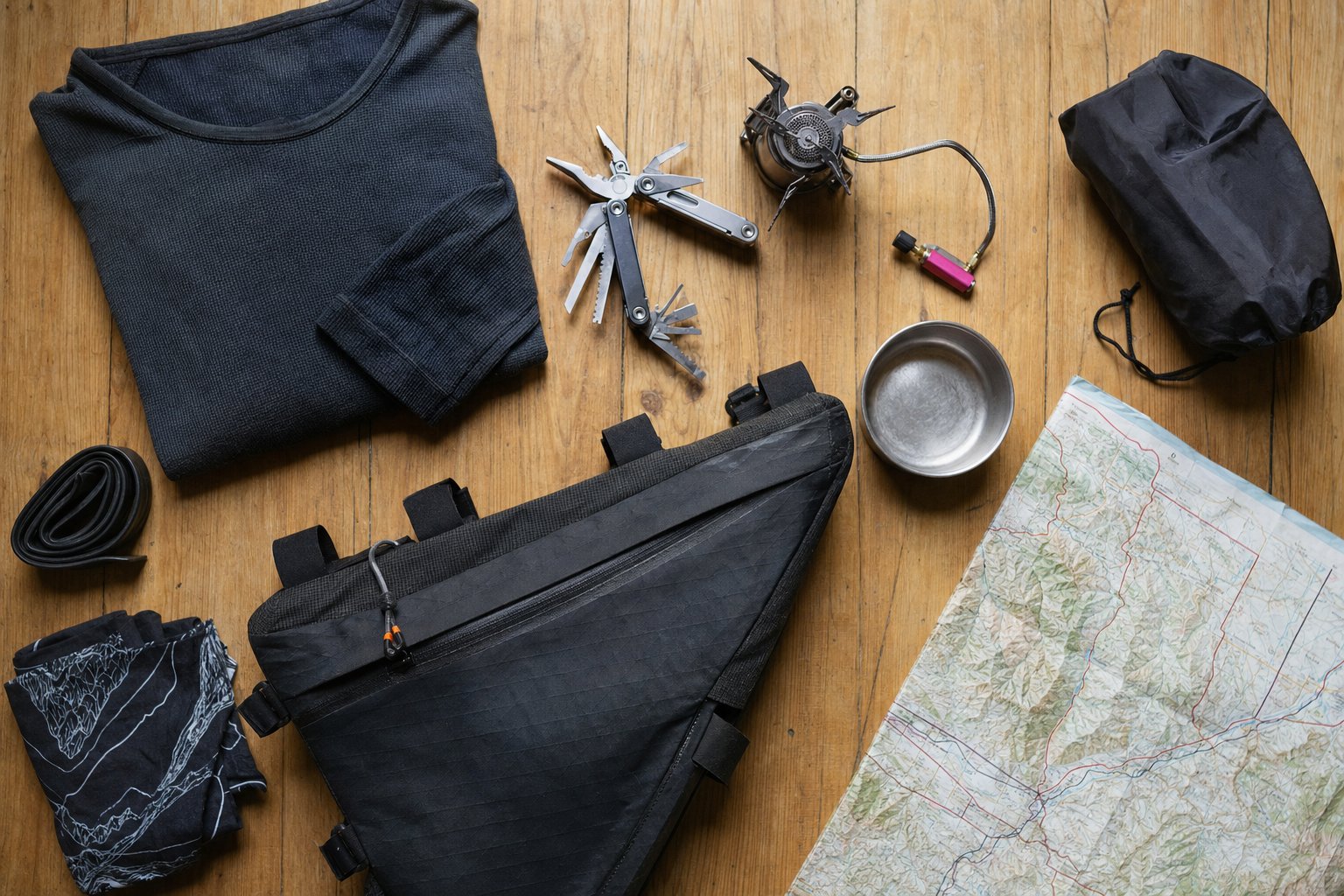
Touring & Bikepacking Gear
What we'd actually pack — told as stories, not spec sheets.
Why This Pillar
No "best of" tables, no star ratings. Just the gear that earned its place in the bag, and the ride that proved it — or didn't.
We don't run comparison spreadsheets or score gear out of ten. A bag either survives being packed and unpacked at a trailhead every day for a week, or it doesn't — and that's closer to how most riders actually decide what stays in the shed.
The gear that earns a spot on this pillar has usually replaced something else first: a frame bag that finally didn't rattle loose on washboard gravel, a pannier hook that didn't crack after a season of use. We're more interested in what a piece of gear does wrong under real conditions than what it claims to do on a spec sheet.
None of that means every rider needs the same setup. Someone loading a bike for a week of remote bikepacking has different priorities from someone touring on paved roads with panniers, and a bag that's brilliant for one is often the wrong choice for the other. The guides on this pillar are built around that distinction rather than treating "bike gear" as one category with one right answer.
Right now that's bags — the frame bag, seat pack and handlebar roll setup that carries everything on a loaded ride — and the touring bike itself, since frame and fit matter more here than almost any other single choice a rider makes before a trip.
Comparisons get published when there's a real decision behind them, not because two products exist and pitting them against each other makes an easy headline. Panniers versus bikepacking bags is a genuine fork in the road depending on the terrain and the load; a lot of gear matchups aren't.
What's deliberately missing from this pillar: helmets, clothing, electronics, anything where the honest answer is "buy whatever fits properly and don't overthink it." Padding this out with categories that don't actually have a meaningful decision behind them would be exactly the spec-sheet-driven approach this site exists to avoid.
Gear pieces earn a spot here the same way they'd earn a spot in an experienced rider's shed — surviving a season of actual use, not scoring well on a features list. That's a slower way to build out a gear pillar than churning through every category at once, and it's the trade-off worth making.
The costliest gear mistake isn't picking the wrong brand — it's picking the wrong category for how you actually ride, then replacing the whole setup within a season once the mismatch shows up on the road. A pannier rig bought for a paved tour handles nothing like a bikepacking bag setup asked to survive washboard gravel, and no amount of brand research fixes a category-level mismatch.
That's the real case for reading a comparison before buying instead of after — not because one option is objectively superior, but because the wrong category costs more over the life of a setup than the wrong brand within the right one ever does. A merely decent frame bag that's the right shape for the trip beats a highly-rated one built for a different kind of riding entirely.
Get the setup category right first. The specific bag, pannier or bike matters less than which kind of gear the trip actually calls for — and that's the question every comparison on this pillar is actually trying to answer, underneath whatever specific products it happens to name.
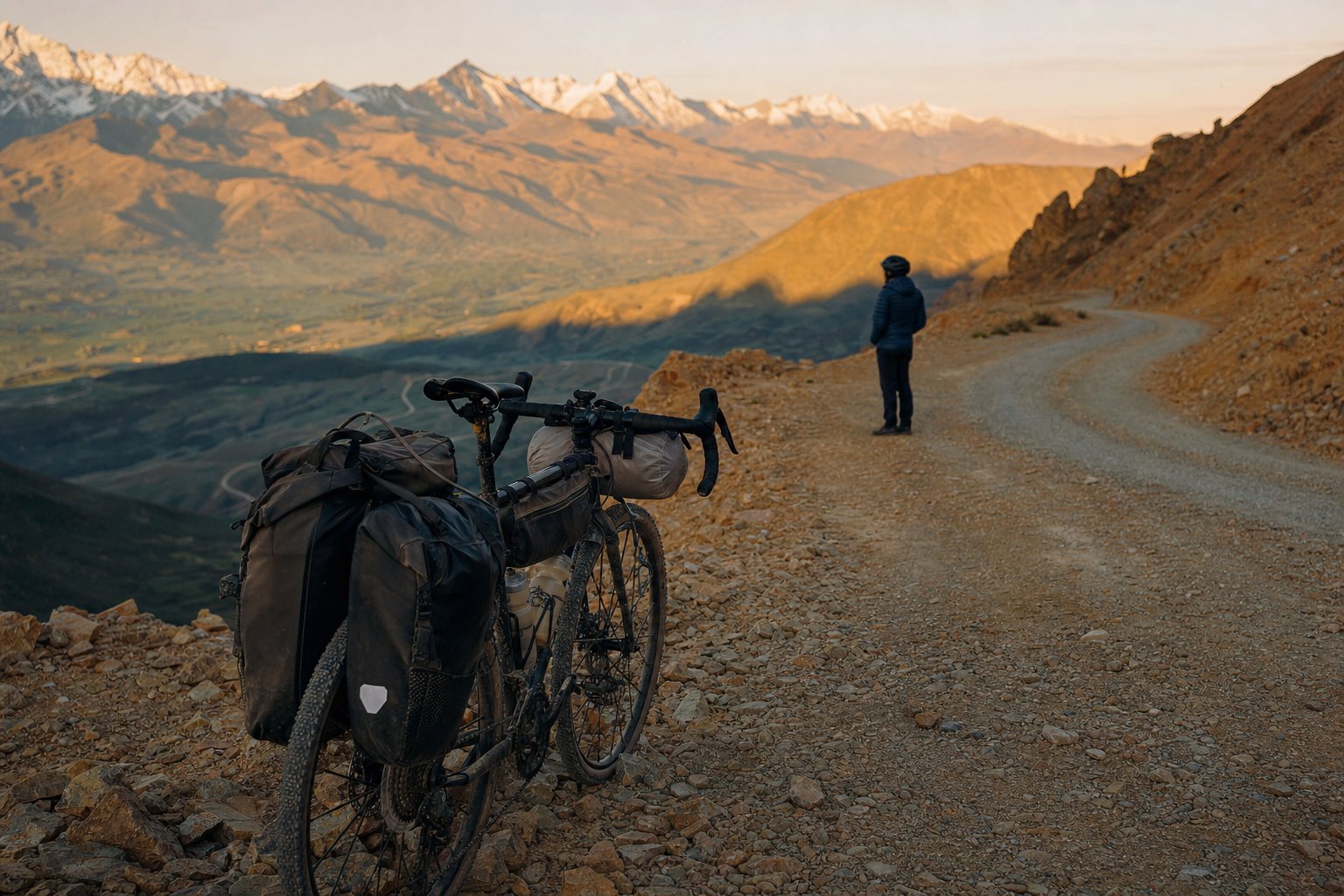
Choosing a Touring Bike: What Actually Matters
What matters more than the spec sheet when the bike is your only way home.
Read the guide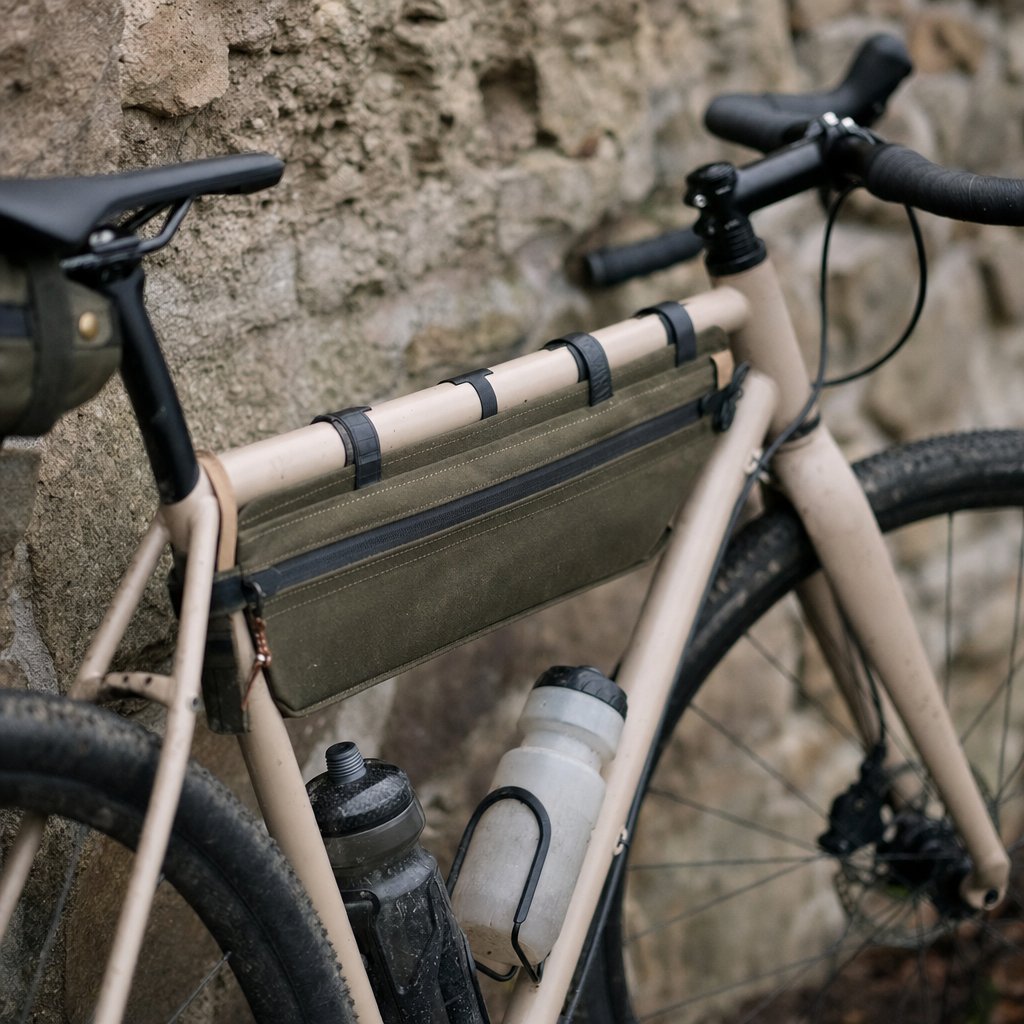
Bikepacking Bags: A Guide to Choosing the Right Setup
Restrap, Rogue Panda, Road Runner — what actually differs once you're loaded and climbing.
Read the guide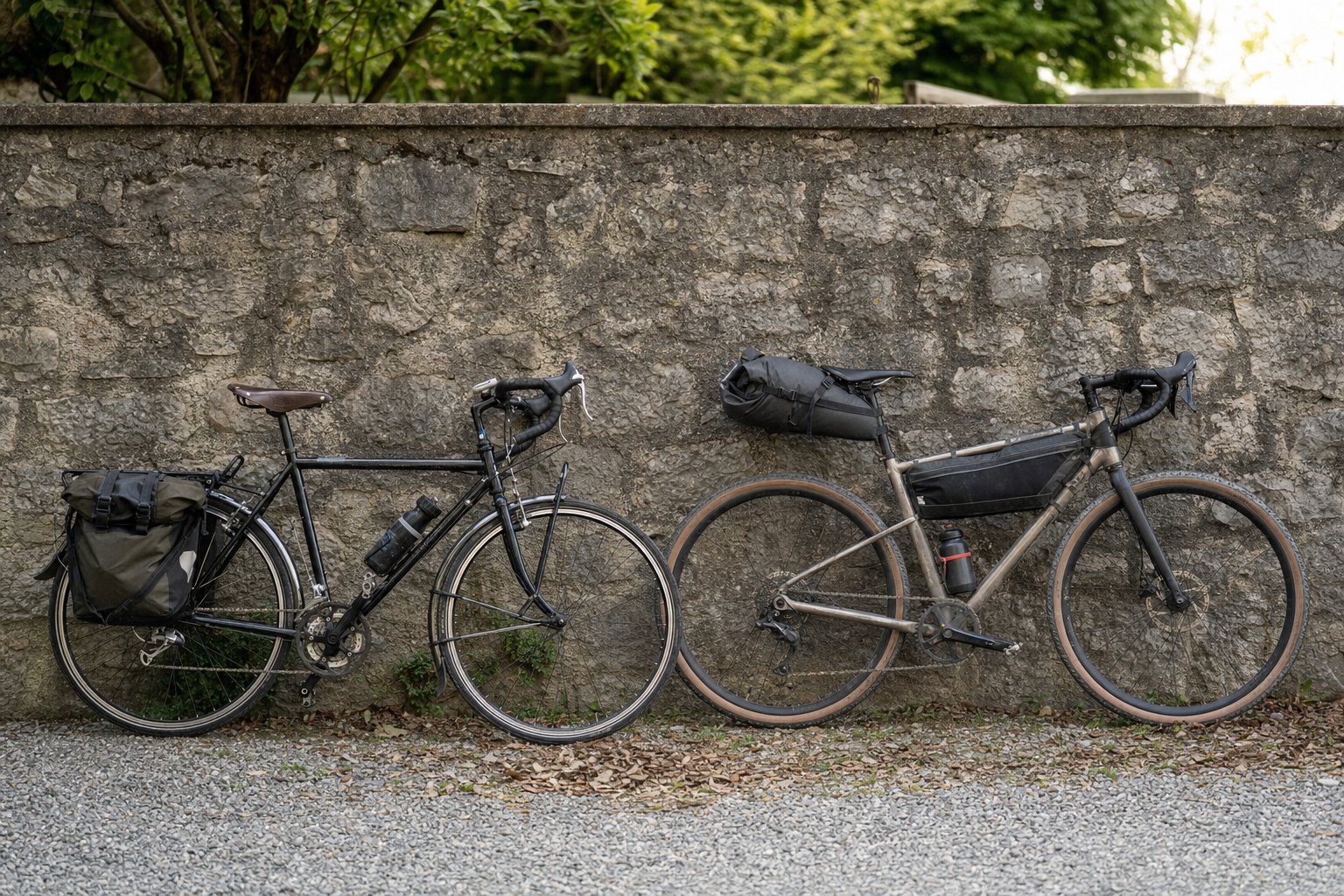
Touring Panniers vs. Bikepacking Bags
Which setup actually fits your ride — a straight comparison, no verdict forced.
Read the guideA couple of things people ask
Do panniers or frame bags make more sense for someone touring for the first time?
Panniers are usually the easier starting point — they're simpler to pack, cheaper to buy into, and don't require the frame-specific fitting a bikepacking bag setup does. Frame bags earn their keep on rougher terrain where panniers catch on obstacles or unbalance the bike, which is more of a bikepacking-specific problem than a touring one.
How long should decent bikepacking bags actually last?
A well-made set should handle several seasons of regular use before anything more than the zippers or straps needs attention. Cheaper bags tend to fail at stress points first — buckle attachments, the seams where a bag meets its mounting straps — long before the fabric itself gives out.
Is it worth buying touring-specific gear before a first trip, or can I start with what I already own?
Start with what you have for a shorter trip and see what actually annoys you — that tells you more than a gear list ever will. The one thing worth getting right early is anything that touches the bike's mounting points, since a badly fitted rack or bag can cause damage a general-purpose item won't.
What actually separates a good frame bag from a mediocre one?
Fit to your specific frame matters more than the fabric spec sheet — a bag that rubs through its own material on the top tube after a few hundred miles has failed regardless of what it's made from. After that, it comes down to how it handles being packed unevenly, since almost nobody loads a frame bag perfectly every time.
Should weight or waterproofing decide which bag to buy first?
Weight matters less than most buyers assume — the difference between a light and a heavy bag is usually a few hundred grams, which disappears next to the weight of what you actually pack inside it. Genuine waterproofing (a welded roll-top, not just a water-resistant fabric) is the detail that actually saves a trip when the weather turns.