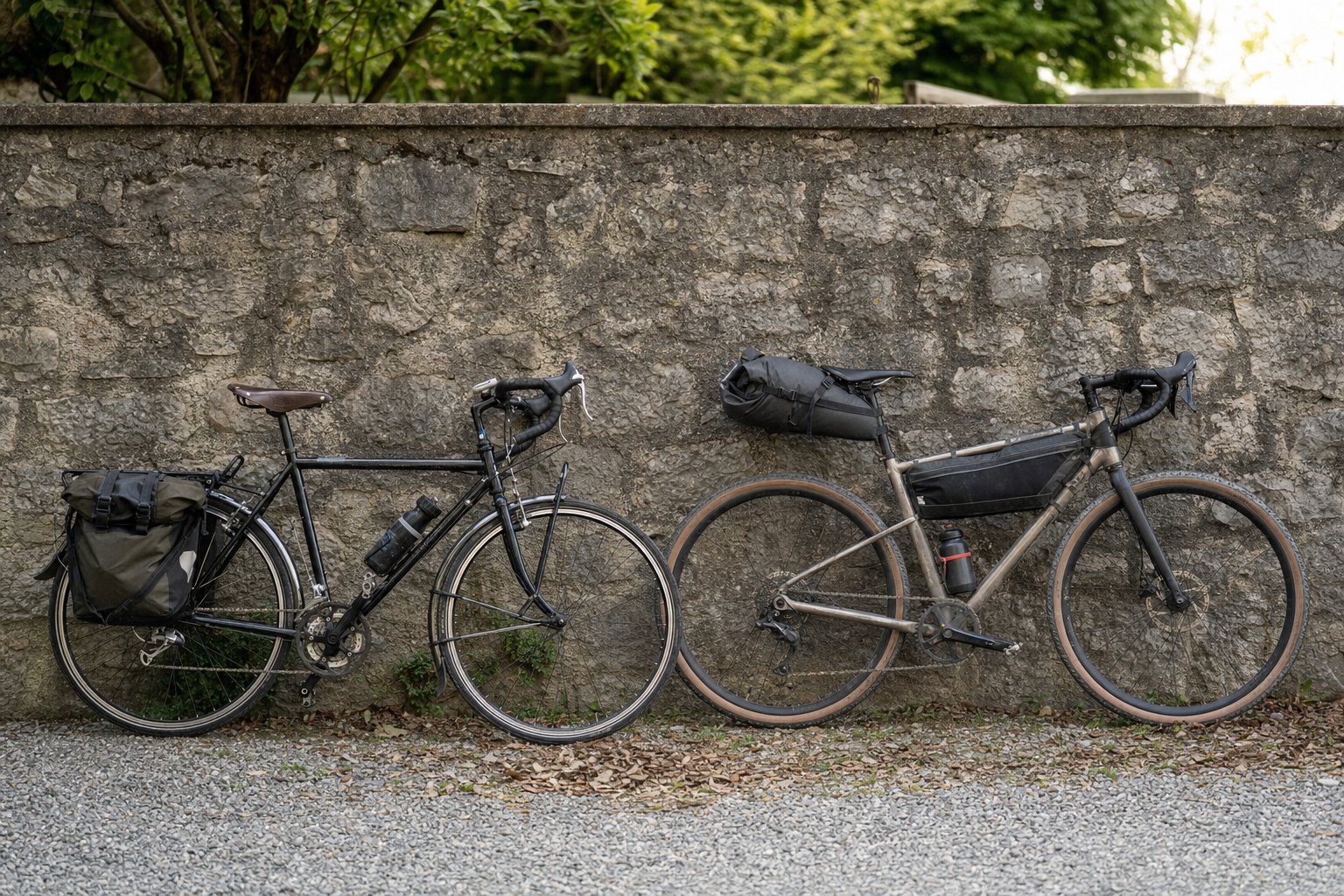
These two systems get compared like one has replaced the other. It hasn't — they solve different problems, and the "right" one depends entirely on the terrain and the length of the trip, not which is newer or trendier.
Carrying capacity
Panniers win outright on volume. A rear rack with two full panniers plus a handlebar bag carries genuinely more than a bikepacking soft-bag setup can manage without becoming absurdly bulky. For a multi-week tour with real food and clothing needs, that capacity difference is the whole decision.
Handling on rough terrain
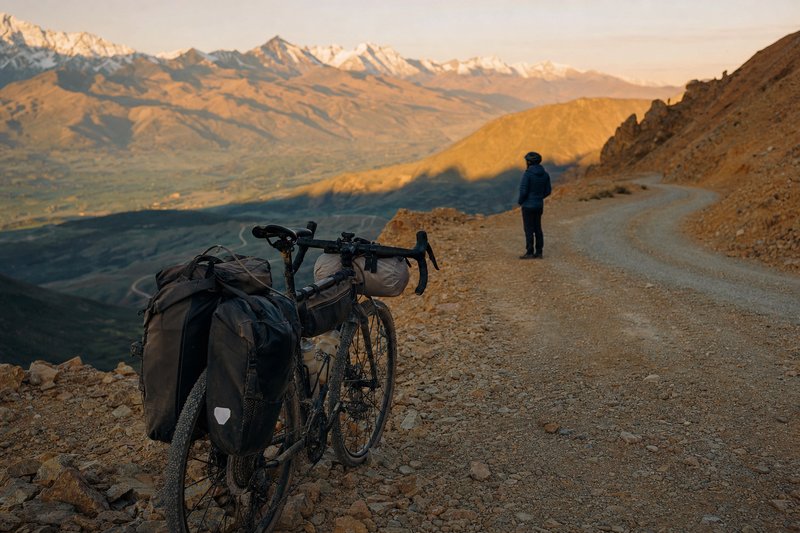
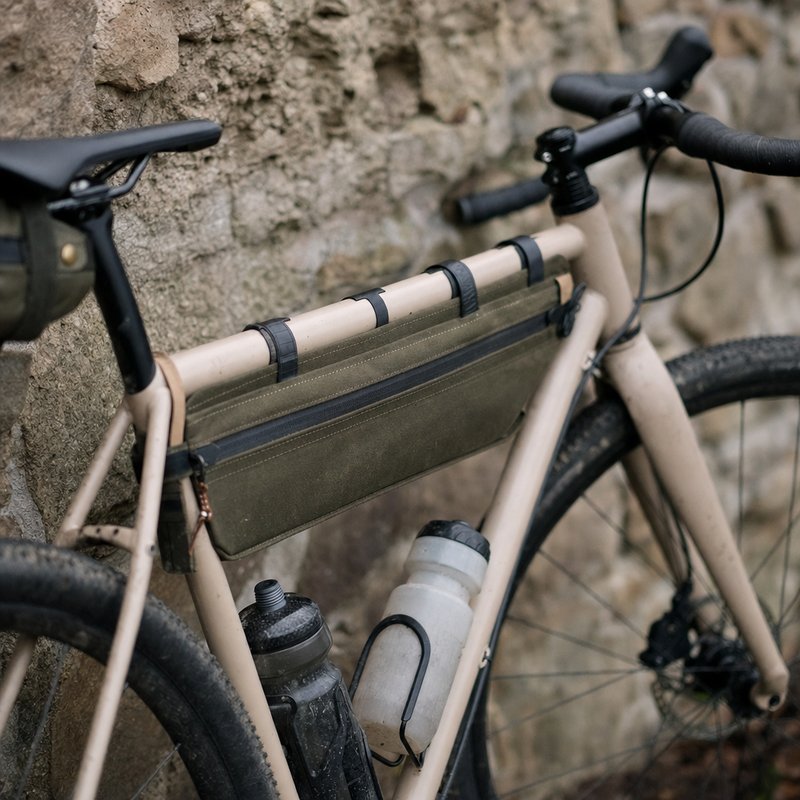
This is where bikepacking bags win clearly. Panniers hang low and wide off a rack, which is stable on smooth surfaces but starts to catch on narrow singletrack and unbalances the bike on technical, uneven ground. A soft-bag setup — frame bag, seat pack, handlebar roll — keeps weight closer to the bike's center and narrower overall, which matters a lot the moment the surface gets genuinely rough.

Panniers are built to carry more. Bikepacking bags are built to go places panniers can't.
Durability and practicality
A rack-and-pannier system is mechanically simple and easy to repair anywhere — it's mounting hardware and waterproof bags, not much can go wrong that a bolt or a zip tie can't temporarily fix. Bikepacking bags rely more on straps and Velcro directly against the frame, which is lighter and more aerodynamic but a genuine wear point over months of use on rough surfaces.
Neither system is maintenance-free, though the failure points are different. A pannier's plastic mounting hooks can crack after enough vibration on corrugated gravel or cobbles, and it's worth knowing that failure mode — and carrying a spare hook or a length of wire — before it happens far from a bike shop. Bikepacking bags fail more gradually: the straps and Velcro holding a frame bag in place loosen with vibration and need periodic retightening, and unlined fabric pressed against the frame can rub through paint on a long, rough trip if you don't check it.
Weather resistance and how each one packs
Panniers are usually fully waterproof roll-top units by design, which is a large part of why they remain the default choice for wet climates — you load them and stop thinking about rain. Bikepacking bags vary more: plenty of frame bags and seat packs are water-resistant rather than genuinely waterproof at the zip, so anything that truly can't get damp — a sleeping bag, electronics, a spare layer for a cold night — is safer packed in its own small dry bag inside, regardless of what the outer bag's rating claims.
Wind resistance and how much it actually matters
Wide panniers hanging off a rack catch noticeably more wind than a soft-bag setup tucked close to the frame, and on a long, flat, exposed day into a headwind that difference is real — riders who've done both report feeling it directly, not just in theory. It matters less than it sounds on a mixed-terrain trip with regular climbs and turns, where aerodynamics were never the limiting factor to begin with.
This is one more reason bikepacking bags suit faster, lighter, more athletic riding while panniers suit a steadier touring pace — the aerodynamic penalty of panniers is a real cost, but it's a cost tourers riding at touring speed have generally already decided is worth paying for the extra capacity and simplicity.
Which one for what
Road and canal-path touring, multi-week trips, or anywhere resupply points are far apart: panniers. Gravel routes, singletrack, or anything closer to a long weekend than a month: bikepacking bags. Plenty of experienced riders own both and choose per trip rather than picking a side permanently.
A couple of things people ask
Can I mix the two systems?
Yes, and many riders do — a frame bag alongside a single rear pannier, for instance, is a common hybrid for routes that are mostly smooth with occasional rougher sections.
Which is better for a first tour?
If the route is mostly road or canal towpath, panniers are the simpler, more forgiving choice to start with. If it's mixed terrain or genuinely off-road, start with bikepacking bags so the setup doesn't fight the terrain from day one.
Do bikepacking bags get in the way of pedaling?
A frame bag sized correctly for the main triangle shouldn't touch your legs at all. An oversized one can rub the inside of a knee on the upstroke, so it's worth checking clearance with the bag fully loaded before committing to a long ride with it.
Which setup ends up heavier once loaded?
The bags themselves are broadly comparable in dry weight, but a rack-and-pannier system typically adds more total system weight than a soft-bag setup once the rack itself is counted — offset by the extra carrying capacity panniers give you for the same trip.