A touring bike doesn't need to be exciting. It needs to still be working three weeks and four hundred miles from the nearest shop, loaded with everything you own, on parts a small-town mechanic can actually source.
Steel, still, for a reason
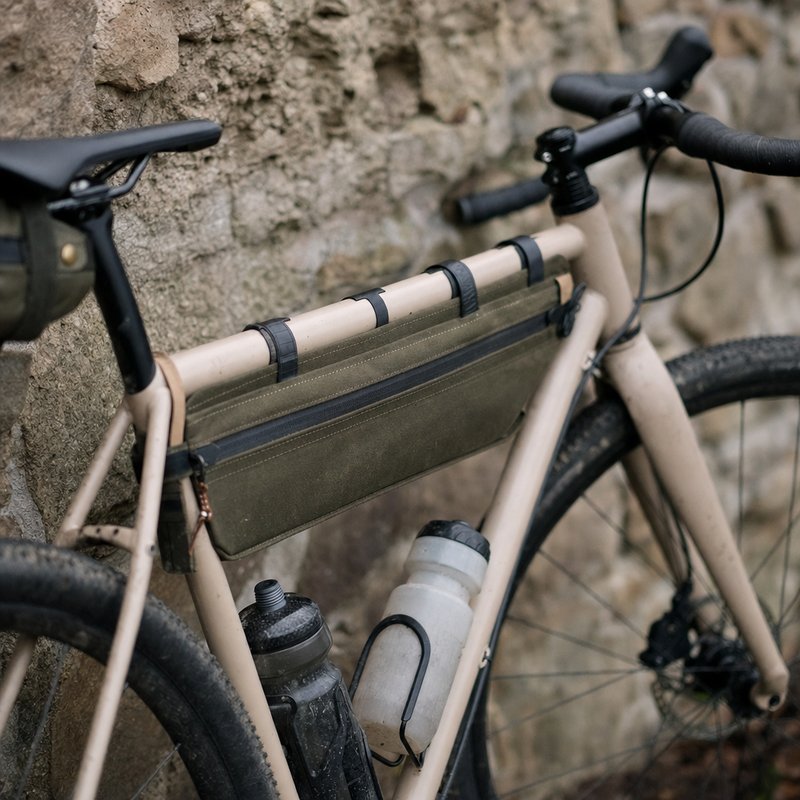
Aluminum and carbon touring frames exist, but steel remains the default for a practical reason: it's repairable. A cracked steel frame can be brazed back together by a welder in a market town on three continents. A cracked carbon frame ends the trip.

Parts you can actually replace on the road
The unglamorous truth is that touring bike choice is mostly about component availability, not performance. Standard-diameter wheels, common bottom bracket threading, a derailleur that isn't this year's flagship — all of it trades a small amount of "better" for a large amount of "fixable by a stranger with a toolbox."
The best touring bike is the one a bike shop in a small town you've never heard of can still fix.
Carrying capacity, and why racks still win for long tours
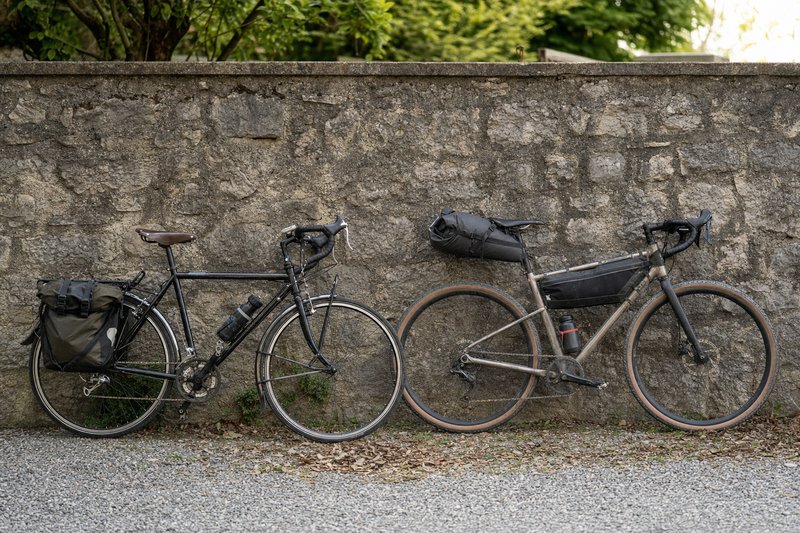
For anything measured in weeks rather than nights, traditional panniers on a rack still carry more, distribute weight lower, and survive rough handling better than a bikepacking-style soft-bag setup — which is built for a different job entirely (see our panniers vs. bikepacking bags comparison for where each actually wins).

Gearing built for climbing loaded, not racing
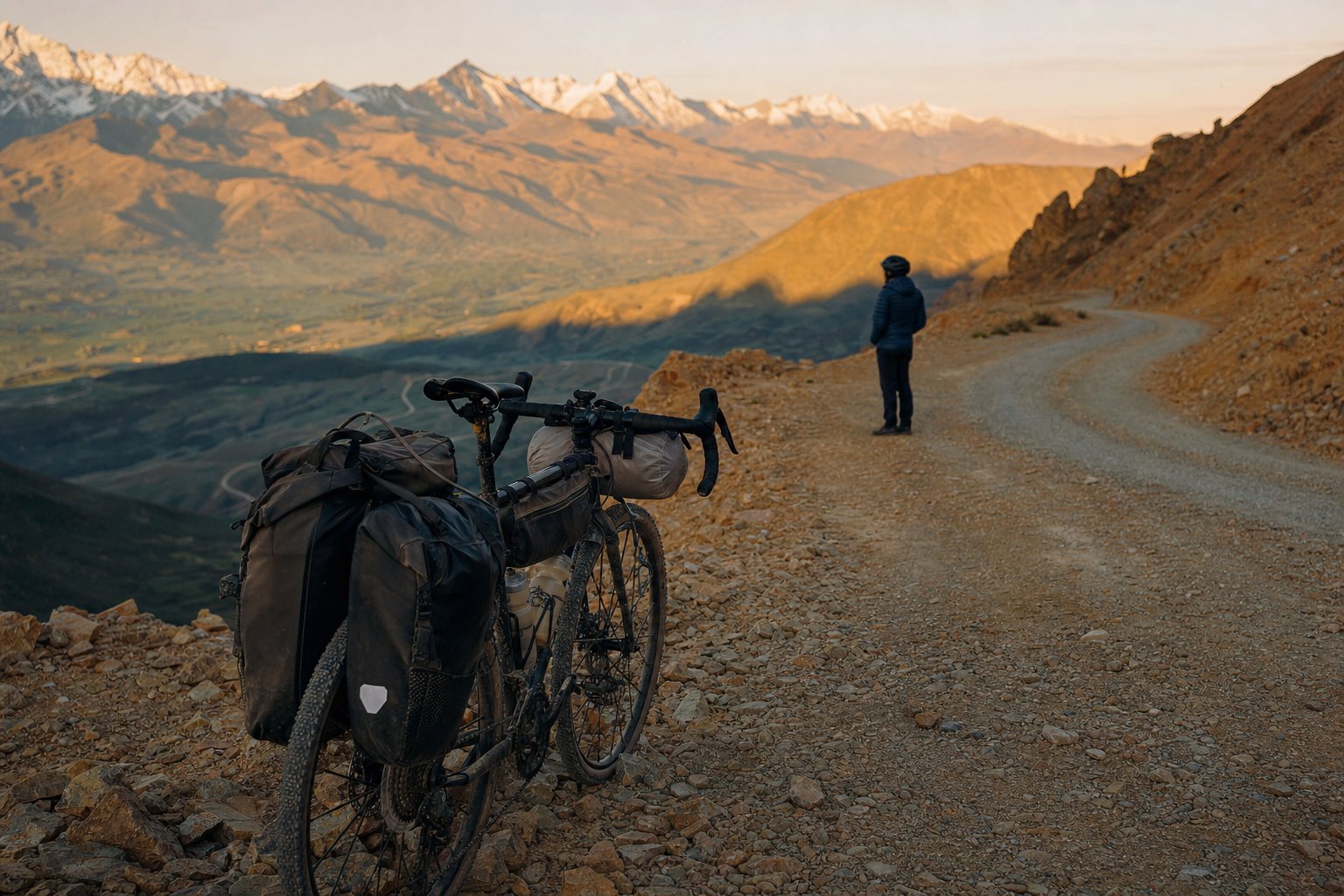
A fully loaded touring bike can easily carry an extra 20-30kg over its unloaded weight, and that changes what "enough gear" means on a climb. Touring-specific drivetrains lean toward wide-range gearing — a triple chainring or a wide-range 1x setup — with a genuinely low bottom gear that a race-oriented road or gravel groupset simply doesn't offer. The goal isn't top-end speed, it's being able to spin a low enough gear up a loaded climb without grinding your knees or having to walk. Riders coming from road cycling are sometimes surprised by how low that lowest gear needs to go once the bags are actually packed.
Fit for the long haul, not the sprint
Touring geometry trades a road bike's aggressive, low front end for a more upright, sustainable riding position — the kind of fit that's comfortable for eight hours a day, week after week, rather than optimized for an hour-long effort. Longer chainstays keep loaded panniers clear of your heels while pedaling, and a longer wheelbase overall adds stability that matters more when the bike is carrying real weight than it does empty. None of this makes a touring bike quick off the line, but that was never the job it was built for.
Wheel size and worldwide parts sourcing
Some dedicated touring frames still spec 26-inch wheels rather than the now-standard 700c, and it's a deliberate, if increasingly old-school, choice rather than an oversight. In parts of the world with less-developed bike infrastructure, 26-inch tires and tubes are historically far easier to find in a small-town shop than 700c, since they've long been the standard size for utility and mountain bikes globally. It's a shrinking advantage as 700c becomes more universal even in remote areas, but it's exactly the kind of "boring but practical" decision that touring bike design keeps coming back to.
A couple of things people ask
Is a gravel bike close enough to a touring bike?
For shorter, lighter trips, yes. For genuinely long, fully loaded tours, a gravel bike's tighter tolerances and lighter-duty parts start to show — touring bikes are over-built on purpose.
Do I need disc brakes for touring?
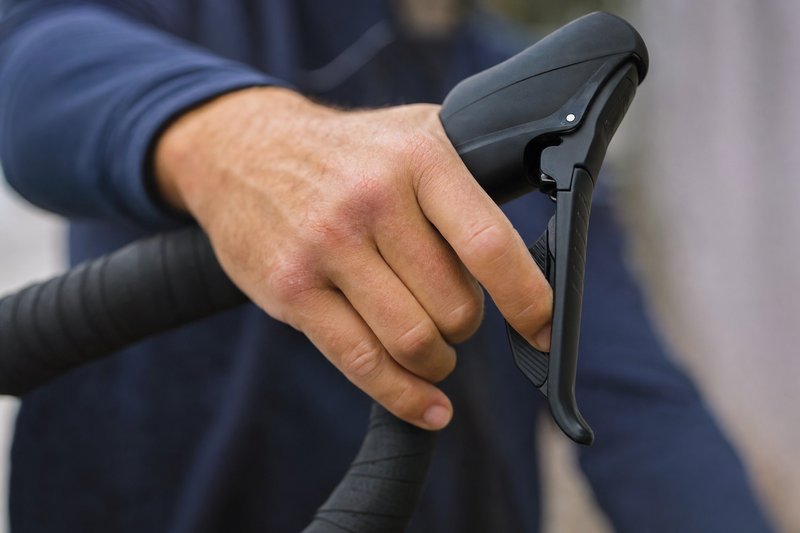
Not strictly — rim brakes are simpler to fix with basic tools anywhere in the world, which is a real advantage on a long, remote tour, even though disc brakes perform better loaded and wet.
How much weight can a touring bike actually carry?
It varies by frame and rack rating, but a well-built touring setup is commonly designed to handle a fully loaded rider-plus-gear weight well beyond what a road or gravel bike's frame and wheels are rated for — check the frame and rack manufacturer's stated limits rather than assuming, since exceeding them is a real safety issue, not just a comfort one.
Is steel touring bike actually noticeably heavier to ride?
The frame itself is heavier than an equivalent aluminum or carbon frame, but once the bike is loaded with camping gear, food and water, that difference becomes a small fraction of the total weight being moved — the repairability trade-off matters far more in practice than the raw frame weight.