Most brake problems aren't actually brake problems — they're alignment problems. Before you touch the pads or bleed anything, it's worth ruling out the two-minute fixes that solve almost every case of rub, squeal or a lever that feels wrong.
Loosen the caliper and check rotor alignment
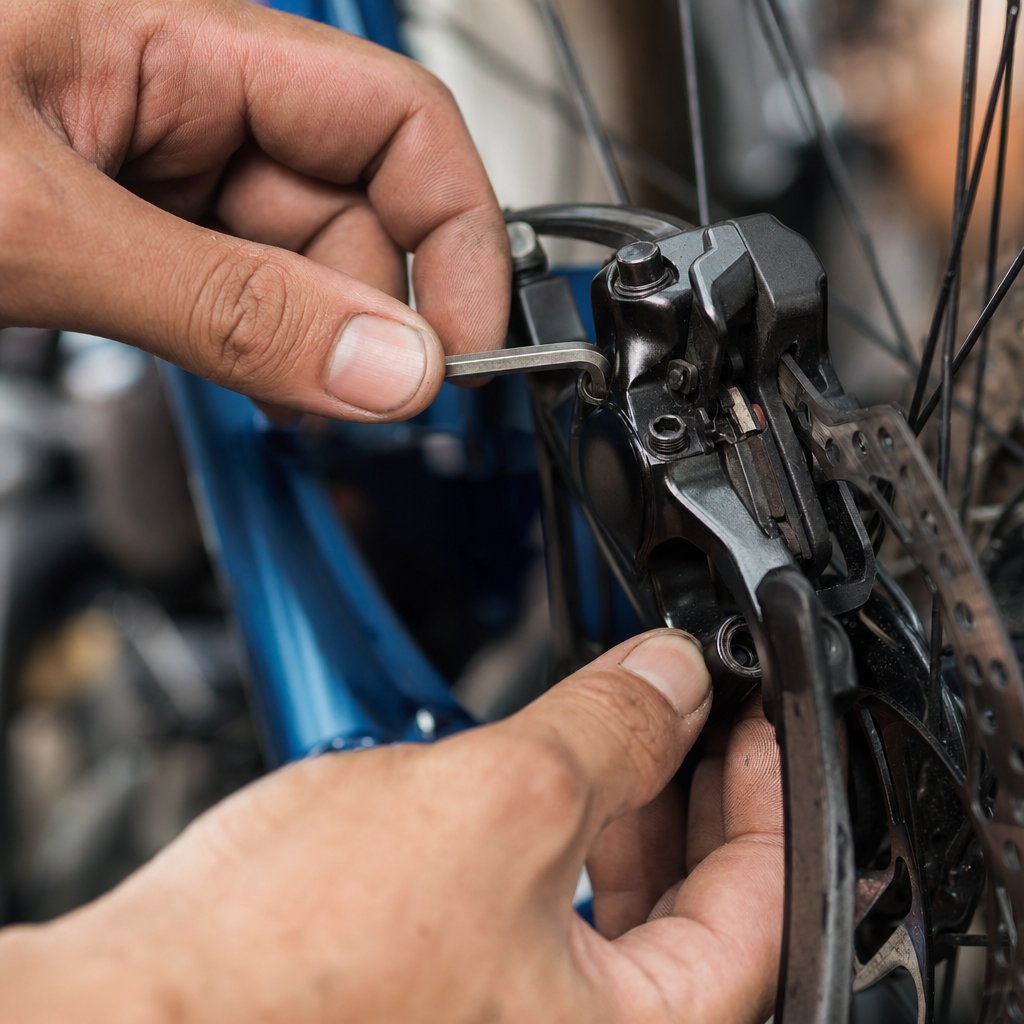
Slightly loosen the two caliper mounting bolts so the caliper can float freely. Squeeze the brake lever and hold it — this centers the caliper on the rotor by itself. Keep holding while you re-tighten the bolts.

Almost every "my brakes are rubbing" complaint is solved by this one step, not by touching the pads at all.
Spin the wheel and listen
With the wheel off the ground, give it a spin and listen for a consistent scrape — that's the rotor still touching a pad. A slight, uneven tick usually just means the rotor has a very minor bend, which is normal and rarely worth chasing.

If it's still spongy, it's air in the line
A lever that sinks slowly to the bar — not just soft, but sinking — means the hydraulic system needs bleeding, not adjusting. That's a longer job with its own tools; don't try to fix it by over-tightening anything.

If it's squealing, that's contamination, not alignment
A high-pitched squeal — especially right as you brake, not a constant noise while rolling — almost always means the pad surface is contaminated, not that anything is out of position. A trace of chain lube, hand grease, or even furniture polish transferred from wiping down the frame near the rotor is enough to cause it. Fixing alignment won't touch this; you have to address the surface itself.
Lightly sand the pad face with fine-grit sandpaper to expose fresh material, then wipe the rotor down with isopropyl alcohol on a clean rag — not a degreaser spray, which can leave its own residue and make the squeal worse rather than better. Brand-new pads squeal for a related reason: they haven't glazed onto the rotor's surface yet. That usually clears up on its own after ten or so firm stops from a moderate speed, which is the standard bedding-in process most brake manufacturers recommend for any fresh pad-and-rotor pairing.
Lever feels too far from the bar? Adjust reach, not cable tension
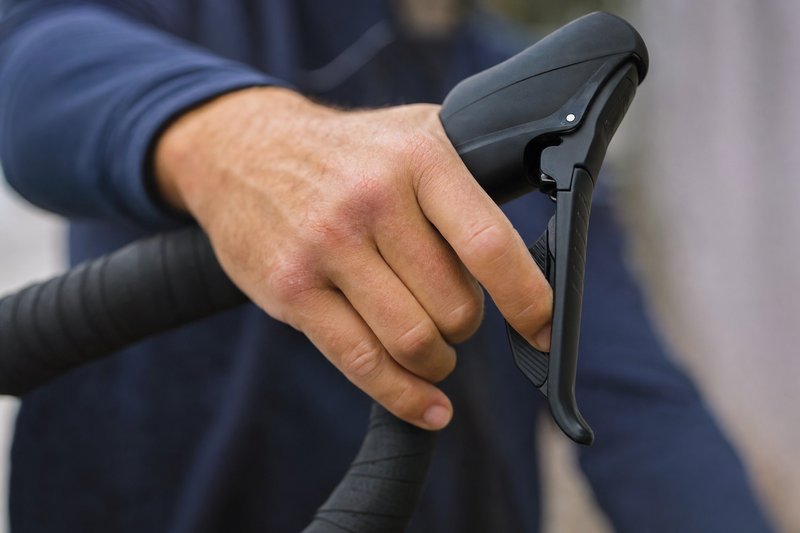
If you have to reach uncomfortably far to get real bite from the brake, most modern levers have a small reach-adjustment screw near the pivot — usually a hex bolt tucked behind or beside the lever blade — that brings the whole lever closer to the bar for smaller hands, without touching the caliper or cable tension at all. It's a comfort setting, separate entirely from the alignment and contamination fixes above.
Some levers pair this with a separate free-stroke or bite-point adjustment, which controls how far the lever travels before the pads engage rather than where the lever sits at rest. Worth checking both if a brake feels either mushy or grabby at the same rotor alignment and pad condition — it may just be set up wrong for your hand size and grip, not actually malfunctioning.
A couple of things people ask
Why do my brakes rub only sometimes?
Usually a slightly warped rotor from heat (a long descent) or a knock. It self-corrects as it cools in most cases — if it's constant, re-center the caliper per step 1 first.
Can I adjust rim brakes the same way?
The centering principle is the same, but rim brakes use a different pinch-bolt mechanism at the caliper arms rather than floating on the rotor — the squeeze-and-tighten trick doesn't apply the same way.
How long should it take for new pads to stop squealing?
Most brakes quiet down within the first ten to twenty firm stops as the pad material transfers evenly onto the rotor. If it's still squealing well past that, suspect contamination rather than a bedding-in issue that just needs more time.
Is it normal for disc brakes to be noisier in wet weather?
Yes — a light metallic ring or occasional squeal in the wet is normal even on well-adjusted, uncontaminated brakes, since water briefly changes the friction between pad and rotor. It should disappear once the surfaces dry; if it persists in dry conditions too, that's the contamination check above, not a wet-weather quirk.