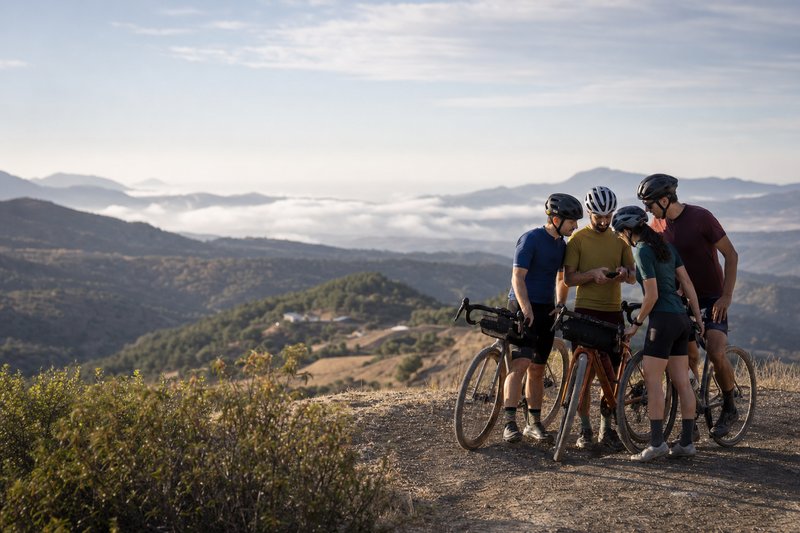
Park a gravel bike and a road bike side by side and the family resemblance is obvious — drop bars, similar frame lines. Ride them on the same loose corner and the resemblance stops immediately.
Tires and pressure
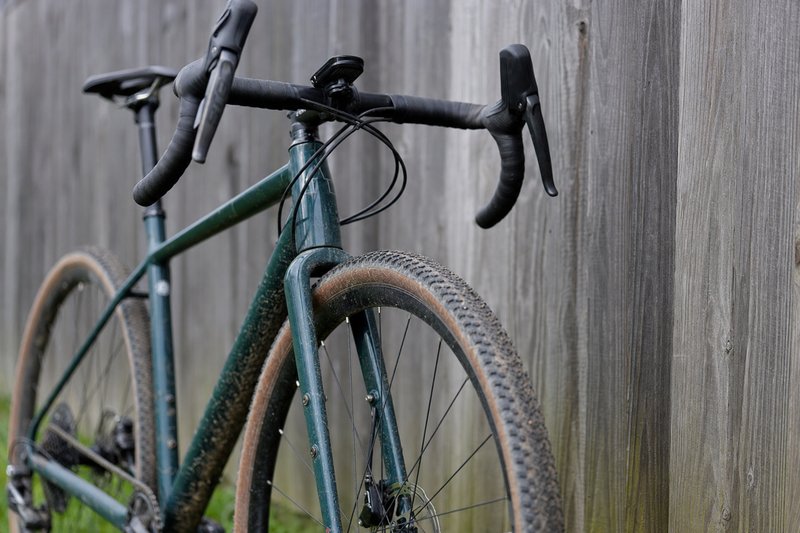
This is the headline difference: gravel bikes typically run 40-50mm tires versus a road bike's 25-32mm ceiling, at noticeably lower pressure. Lower pressure lets the tire deform around loose stones and roots instead of skipping off them — the same reason a road tire pumped rock-hard feels harsh on rough tarmac, just taken further. See our what is a gravel bike explainer for how that tire difference defines the category itself.
Geometry and handling
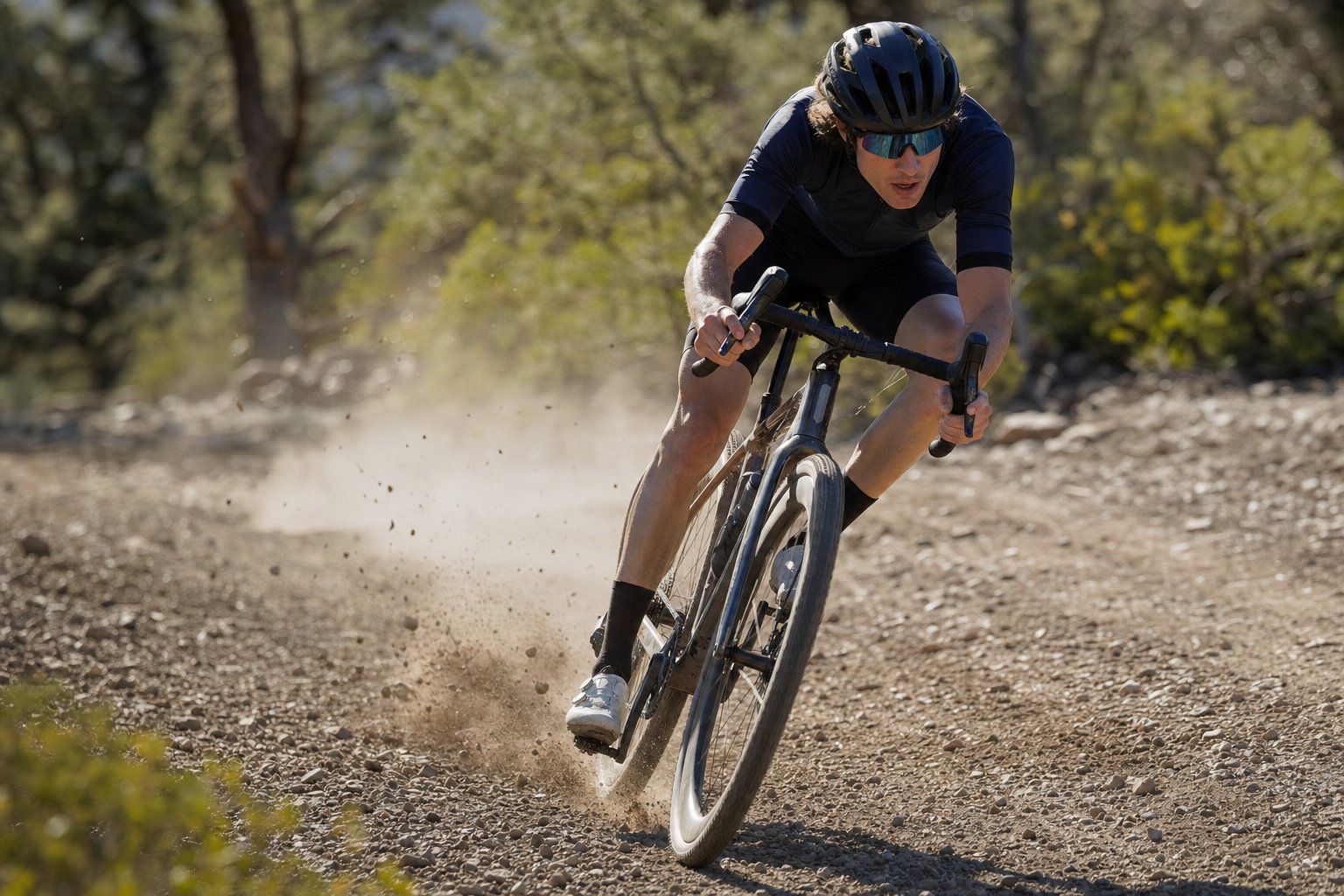
Gravel frames generally run a slightly slacker head angle and a longer wheelbase than an equivalent road frame. On tarmac that trades away some of a road bike's sharp, immediate steering. On loose or uneven surfaces it's the opposite trade: that same geometry keeps the front wheel more predictable when it's skipping over gravel instead of gripping clean asphalt.
A road bike rewards precision. A gravel bike rewards staying loose and trusting the tire.
Riding position and effort
Gravel bikes typically put you in a slightly more upright position than a race-oriented road bike, and wider gearing ranges are common — useful for the steeper, looser climbs gravel routes tend to include, where spinning a lower gear beats grinding and losing traction. The riding itself asks for more constant micro-adjustment: reading the surface, choosing lines, staying relaxed through the arms and shoulders rather than locking up over rough sections.

Average pace
Gravel is slower than road riding for the same effort, surface-for-surface — rolling resistance from wider tires and looser ground costs real speed compared to smooth tarmac. Most riders adjust their pace expectations accordingly rather than chasing road-bike numbers off-road.
Braking on loose surfaces
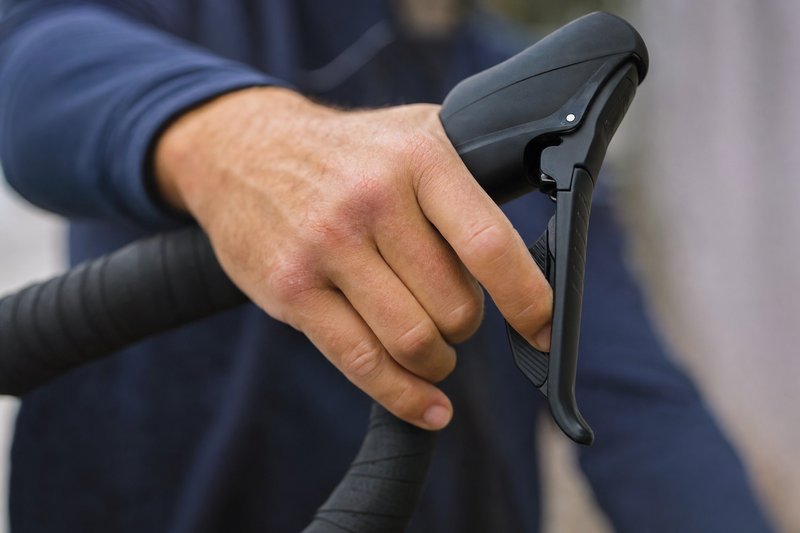
Disc brakes are effectively standard on gravel bikes for a reason that shows up the moment the surface gets loose: modulation matters more than outright stopping power. On gravel, grabbing a brake too hard can break the tire's grip and start a skid on a surface that already offers less traction than tarmac — disc brakes make it easier to feather that edge precisely. Disc brakes have become close to standard on road bikes too by now, though a few rim-brake models persist at the budget end and among custom builders — dry tarmac's more predictable grip is exactly why rim brakes held on there longer than they ever could off-road.
Maintenance rhythm and wear
Gravel riding is harder on a bike than road riding, surface-for-surface. Drivetrains pick up grit and dust that accelerate chain and cassette wear, tubeless tire setups are far more common on gravel specifically to guard against pinch flats and sidewall cuts from rocks, and a bike that regularly sees mud or dust needs more frequent cleaning and lubrication to keep shifting crisp — see our chain-cleaning guide for the routine that keeps a well-used drivetrain running properly. A road bike ridden only on clean tarmac can go considerably longer between deep cleans by comparison.
Group riding culture is different too
Road group rides tend to be tightly paced and formation-conscious — riders drafting close together in a line, holding a steady effort, communicating hazards ahead. Gravel group rides are typically looser: wider trail width limits tight pacelines anyway, riders spread out more to pick their own lines through rough sections, and regrouping at intersections or the top of climbs matters more than staying glued to a wheel the whole way. Neither style is better, but a road rider joining their first gravel group ride is often surprised by how much more independent the riding feels compared to the tight, drafting-focused dynamic of a road peloton.
A couple of things people ask
Can a gravel bike keep up with road riders on tarmac?
It'll be a bit slower for the same effort thanks to wider tires and a less aggressive position, but the gap is small enough that mixed-bike group rides work fine on smooth roads.
Is switching from road to gravel a big adjustment?
The riding position feels familiar almost immediately. The handling takes longer — learning to let the bike move under you on loose surfaces instead of fighting it is the real skill, not the equipment.
Do I need to run tubeless tires on a gravel bike?
Not strictly, but it's worth it for most gravel riding — tubeless setups run lower pressure without pinch-flat risk and seal small punctures from thorns or sharp gravel on their own, which matters more off-road than it does on clean tarmac.
Does gravel riding wear out a drivetrain faster than road riding?
Generally yes — grit and dust act as an abrasive on the chain and cassette in a way clean tarmac doesn't, so a gravel bike ridden regularly in dry, dusty conditions typically needs more frequent cleaning and earlier chain replacement than an equivalent road bike.