Our do you need a special bike for bikepacking guide covers what actually matters on any bike you ride. This one is narrower: the specific point where what you already own stops being enough, and a dedicated bike earns its cost instead of just being a nicer-to-have.
What a hybrid or older road bike can actually handle
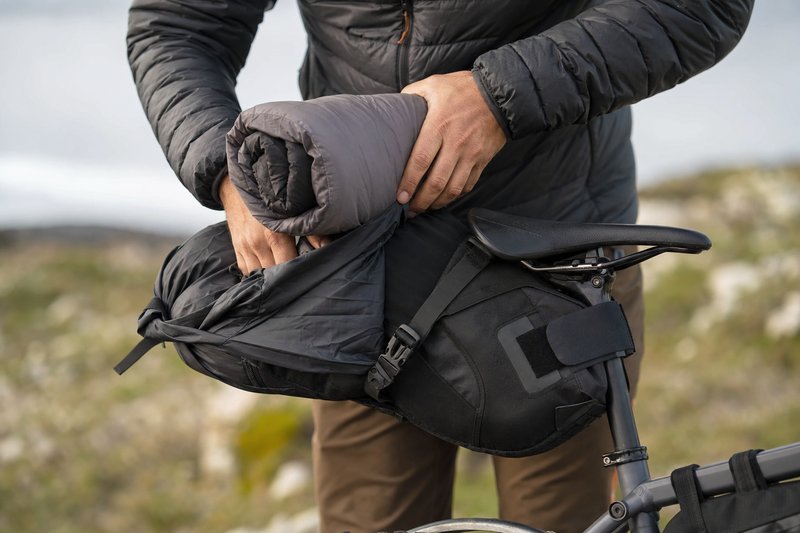
Smooth gravel, converted rail trails, and a mostly-paved route with short unpaved connectors are all realistic on a hybrid or a road bike with slightly wider tires fitted. Frame bag mounts aren't required — saddlebags, a rack, or even a well-loaded backpack can substitute for a first, easy overnighter without buying anything dedicated.
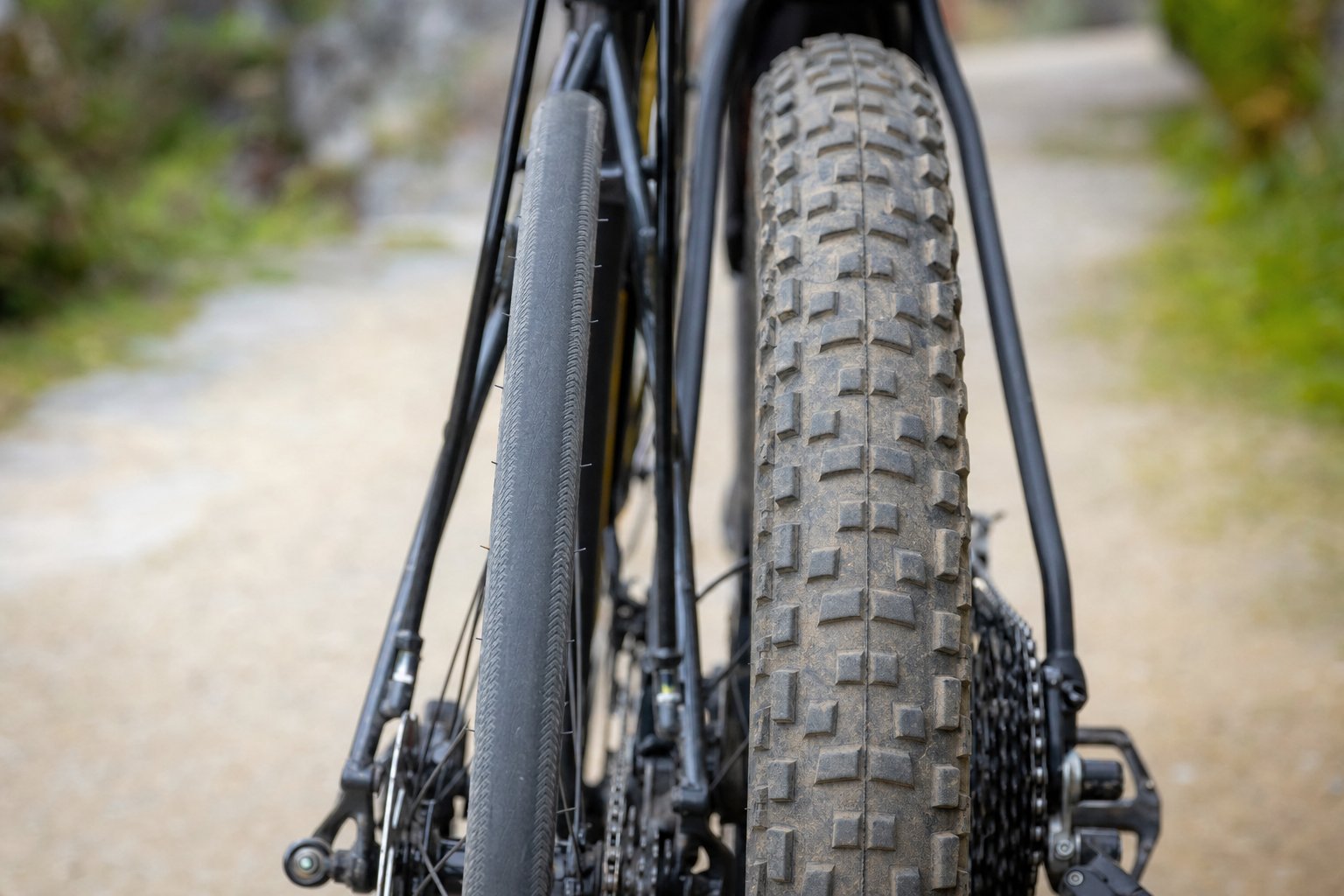
The limiting factor for fitting wider tires is almost always frame and fork clearance, not the wheel or drivetrain. Most older hybrids and road bikes can take a meaningfully wider tire than their stock spec suggests, but only up to whatever gap actually exists between the tire and the frame or brake calipers — measuring that clearance before buying new tires saves a wasted purchase.
The real cost of pushing the wrong bike too far
Riding genuinely technical terrain on a bike that isn't built for it doesn't just feel harder — it accelerates wear on parts that were never designed for that load, particularly wheels, tires and the drivetrain. A narrow rim built for smooth pavement can dent or even crack on rocky, technical singletrack in a way a wider, more robust bikepacking wheel usually won't. That's a real cost to weigh against the price of a dedicated bike, not just a comfort question.
Where it stops being realistic
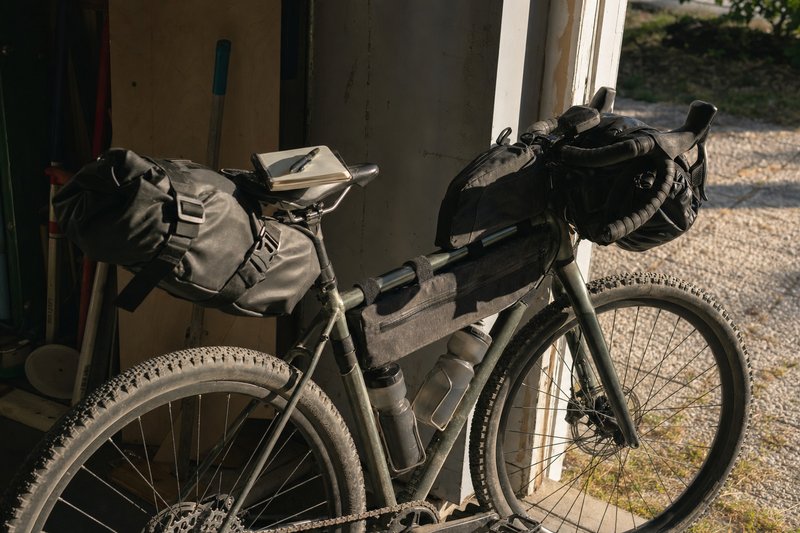
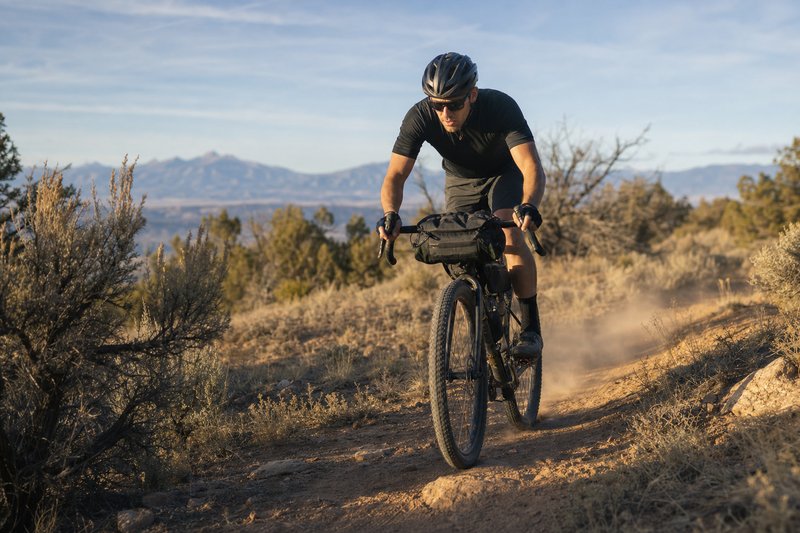
Loose or technical singletrack, multi-day trips with real load, or anything genuinely off-road for extended stretches is where a hybrid's narrower tires and less relaxed geometry start to matter — not as a minor inconvenience, but as a real limit on what's safe and comfortable to ride. This is the point where a dedicated gravel or bikepacking-specific frame — with proper tire clearance and frame-bag mounting points — earns its cost instead of just being nicer to have.
Buy the dedicated bike once you know exactly what you're outgrowing on the one you already have — not before.
Mounting points matter as much as tire clearance
A frame with proper rack and fork bosses — the threaded mounting points a rack or cage bolts straight into — carries load far more securely than a clamp-on rack improvised onto a bike that was never designed for one. Clamp-on racks can work for a lighter, shorter trip, but they're more prone to slipping or flexing under a fully loaded pannier over rough ground, exactly the terrain where a secure mount matters most.
This is a separate question from tire clearance, and worth checking independently: a bike can have plenty of room for a wider tire while still having no real way to bolt on a rack, or the reverse. Some older touring-oriented hybrids have both; plenty of newer fitness hybrids and most road bikes built purely for pavement have neither.
Gearing range is the other quiet limiter
A loaded bike climbs differently than an unloaded one, and a drivetrain built around a road bike's gear range can leave you spinning out or grinding a gear that's too tall the moment real weight and a real gradient show up together. This rarely stops a flat or gently rolling first trip, but it's exactly the kind of gap that turns an ambitious hilly route from a hard day into a genuinely miserable one — worth a quick check of your lowest available gear before committing to anything with sustained climbing.
A middle option: adapt what you own first
Wider tires (within your frame and fork's clearance), a saddlebag or rack-mounted panniers instead of frame-bag mounts, and a genuinely honest read on the route's actual surface can stretch an existing bike further than people expect. This is the cheapest way to find out whether bikepacking is something worth investing in a dedicated bike for, before spending on one — and if you do decide to buy, our bikepacking budget calculator covers what a new bike actually adds to the total across budget, mid-range and premium tiers.

A couple of things people ask
Is it ever worth buying a dedicated bike before a first trip?
Only if you're already confident bikepacking is something you'll keep doing — otherwise, adapting what you own for a first trip or two is the lower-risk way to find out before spending on a bike you might not end up using much.
Is a mountain bike close enough to a bikepacking bike?
For genuinely technical terrain, a mountain bike is often the more capable choice, though it trades away efficiency on the paved or smooth-gravel sections most bikepacking routes still include. See our what is a gravel bike guide for where that middle ground actually sits.
How do I check my frame's real tire clearance before buying new tires?
Measure the gap on both sides of your current tire at its widest point, then subtract a few millimeters for mud clearance. Most bike shops can also check this for you quickly if you're not confident measuring it yourself.
Will a more durable, dedicated bike also mean a heavier one to pedal?
Usually yes, to some degree — sturdier tires, wheels and frame tubing all add weight versus a lightweight road setup. It's a fair trade for most bikepacking use, since durability and load capacity matter more than shaving grams once you're carrying overnight gear regardless.