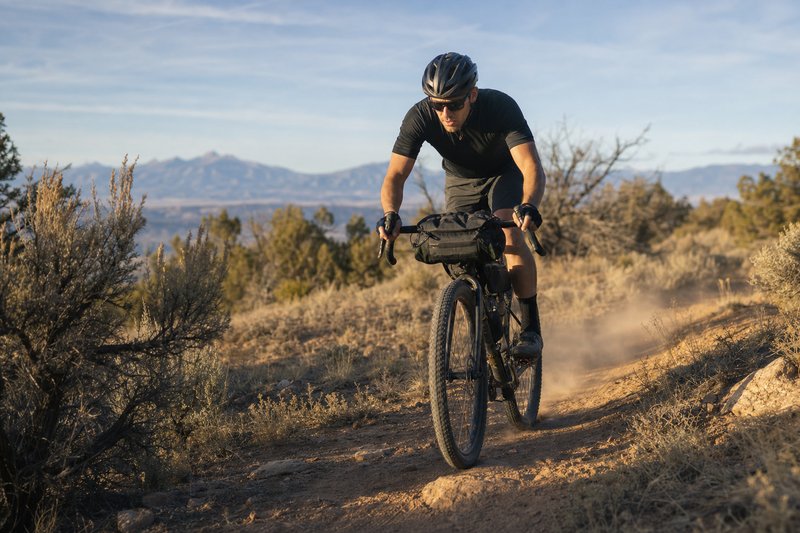
Two riders can carry the same gear list and have completely different rides — one because the bike handles like it's carrying a sandbag on one side, the other because the weight is actually distributed the way the bike's designed to take it.
Heavy and dense goes low and central
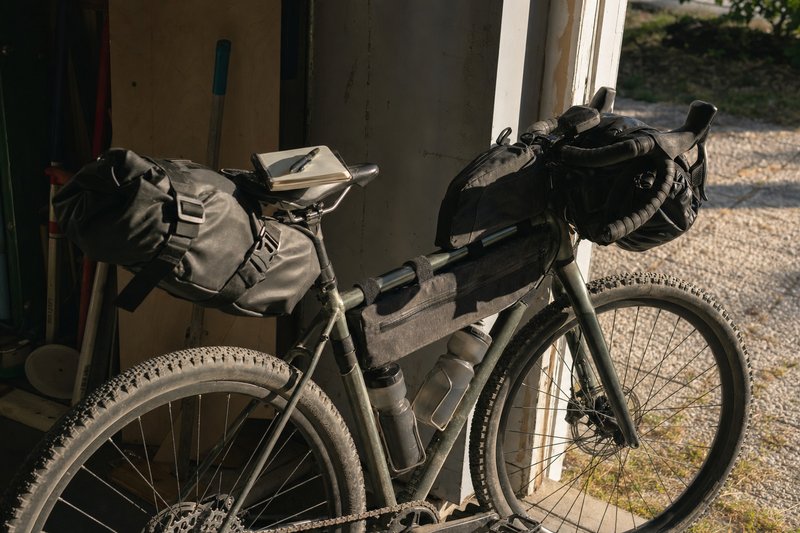
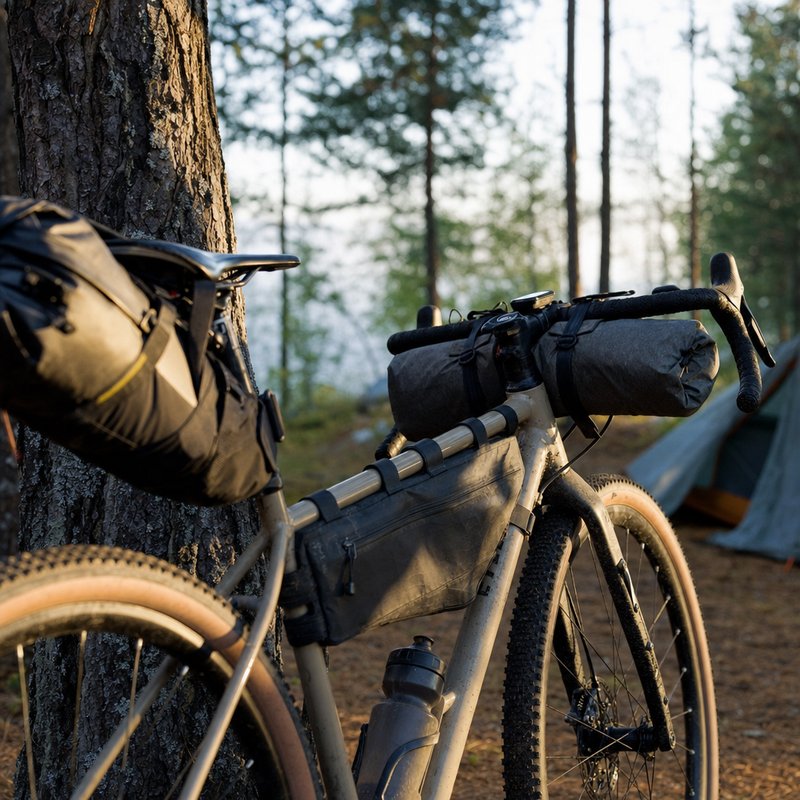
Tools, repair kit, food and water are the heaviest small items on most trips, and they belong in the frame bag — low, between the wheels, where added weight barely changes the bike's handling. A frame bag stuffed with dense, heavy gear is the single biggest thing that separates a bike that still handles like itself from one that doesn't.
Bulky and light goes up front and in back
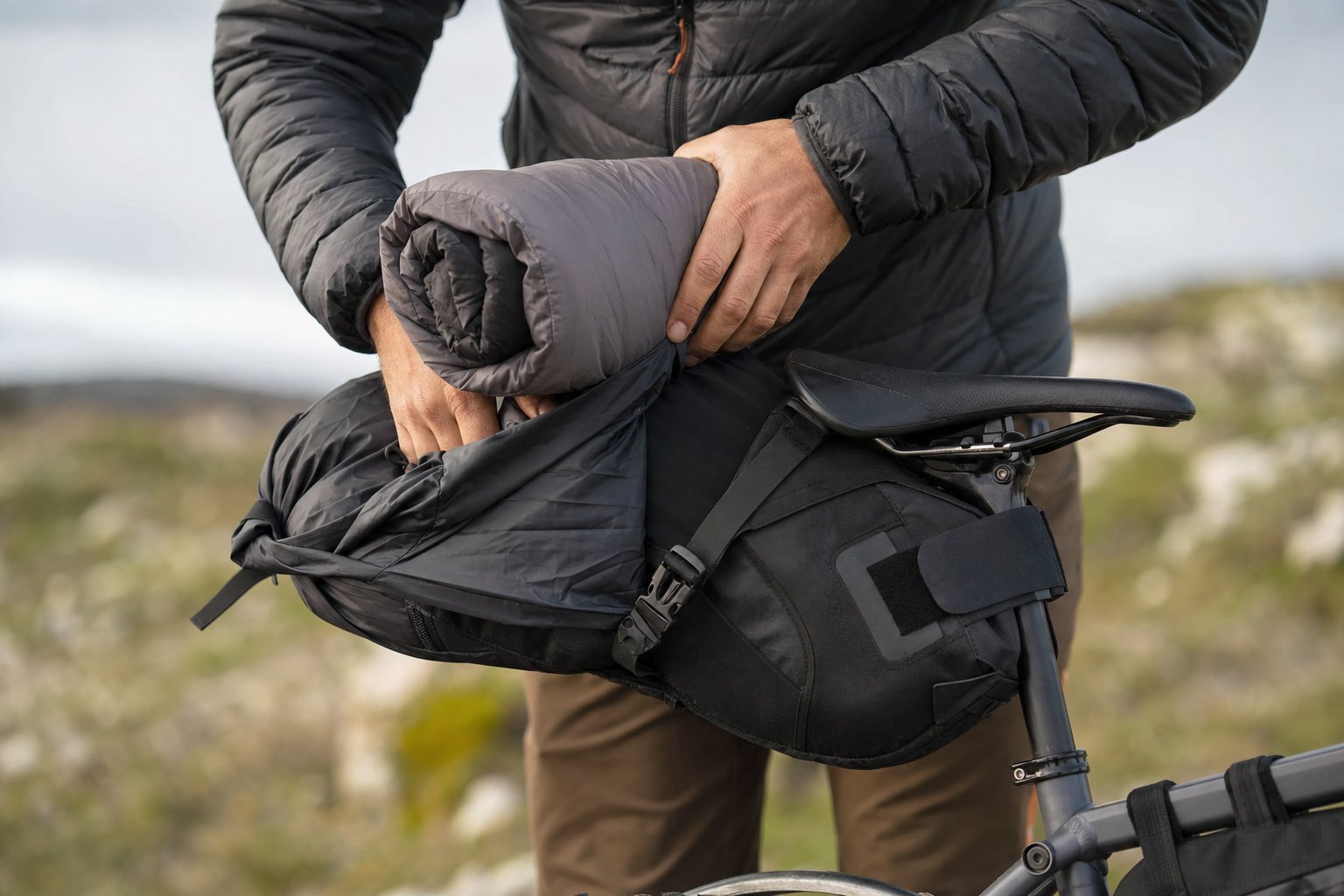
A sleeping bag, tent or bivy, and spare clothing are bulky but genuinely light — exactly what belongs in the handlebar roll and seat pack, since their low density barely affects handling even mounted higher and further from the bike's center. This is also the intuitive order most people get backwards: it feels like the heavy stuff should go in the biggest bag, when it's actually the opposite.

Pack for the bike's balance first, and your own convenience second — not the other way around.
Pack in the order you'll need things, not the order you own them
Whatever you'll want mid-ride without stopping to unpack — snacks, a rain layer, your phone — belongs somewhere reachable without digging: a top-tube bag or a jacket pocket, not buried at the bottom of a stuffed seat pack. Camp-only gear (sleeping system, stove, spare clothes for the evening) can go wherever fits, since it only comes out once a day.
What to actually leave behind
The most common first-trip mistake isn't forgetting something — it's packing for every possible scenario instead of the actual route and forecast. A second complete change of clothes, a "just in case" cook set when the trip is short enough to carry food that doesn't need cooking, and duplicate tools that repeat what's already in a multitool are the usual weight sitting unused at the bottom of a bag by the second day.
Waterproof from the inside, not just the outside bag
A genuinely waterproof roll-top bag still lets water in through a poorly sealed zipper pocket or a gap where a strap passes through, so treat the bag itself as weather-resistant rather than guaranteed dry, especially for anything that ruins a trip if it gets wet — a sleeping bag, spare dry clothes, electronics. A simple dry bag or even a doubled-up plastic bag inside the main pack is cheap insurance that costs almost nothing in weight or space.
This matters more the longer a trip runs, since a single wet night with no way to dry gear out compounds fast — a damp sleeping bag on night one is just uncomfortable; the same bag still damp on night three genuinely affects how well you sleep and recover. Pack the one or two items you can't afford to have wet as if the outer bag will eventually let some moisture through, because on a multi-day trip in variable weather, it usually will.
Check the load before you actually ride away
A packed bag that felt secure standing still can shift, sag or start rubbing a tire within the first few miles once real vibration and cornering load are added — worth a short test ride around the block, fully loaded, before setting off properly. Straps that looked snug when packed on a stand sometimes need a second tightening pass once the bike's been picked up and moved around.
Pay particular attention to anything mounted near the front wheel or the rear tire's clearance — a handlebar roll that's drifted low enough to touch the tire, or a seat pack that's sagged into the rear wheel's arc, are the two most common fit problems that only show up once the bike is actually moving and the suspension of standing-still tension goes away.
A couple of things people ask
How much should a fully packed bikepacking setup weigh?
There's no single right number — it depends on trip length, season and how much comfort you're willing to trade for speed — but most experienced riders converge on carrying noticeably less than they think they need on a first trip, then adjusting up only for what they actually missed.
Should I do a practice pack before the actual trip?
Yes — loading the bike fully and riding a short local loop before the real trip is the easiest way to catch a bag that rubs a tire, a seat pack that sways, or gear you genuinely don't reach for, while it's still cheap to fix.