Bikepacking gets talked about like it's a discipline with its own rules and equipment tiers. It isn't. It's riding somewhere — sometimes twenty miles, sometimes two hundred — and staying overnight before riding back or onward. The bike you already own can probably do it.
What it actually is
Strip away the gear reviews and route porn, and bikepacking is just self-supported cycling with an overnight stop. It borrows from bike touring (carrying your own kit) and from backpacking (going somewhere without much support), but it's less precious about both than either scene tends to be.
You don't need a "bikepacking bike." You need a bike that fits you, a way to carry a small amount of gear, and a plan simple enough that the first thing that goes wrong doesn't end the trip.
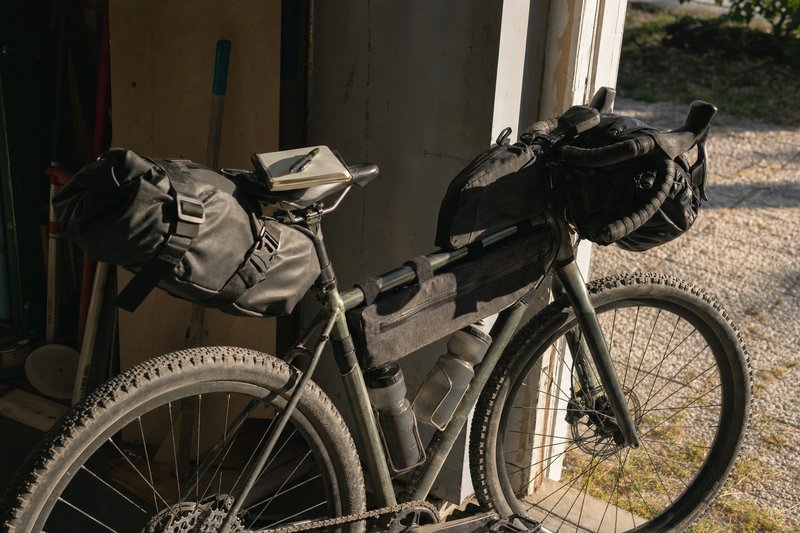
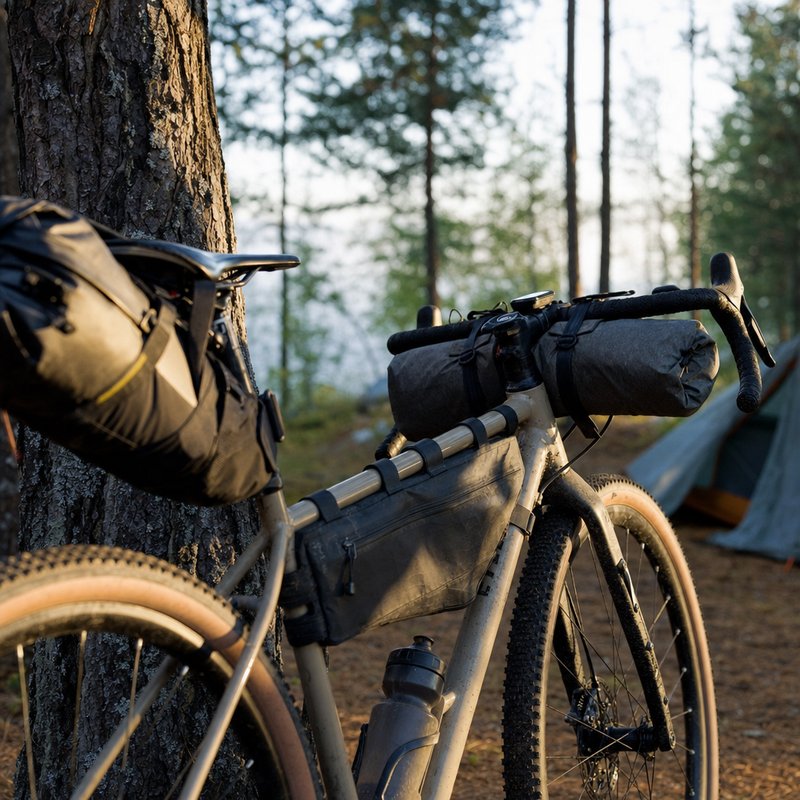
The word itself is newer than the activity — people have been riding somewhere and camping for as long as there have been bikes and tents. What changed is the gear: lightweight strap-on frame bags, seat packs and handlebar rolls replaced racks and panniers for off-road riding, which made loaded bikes noticeably more capable on rough terrain and gave the activity a name distinct from touring.
The variations people lump under one word
"Bikepacking" now covers a wide range of actual trips. A credit-card overnighter carries almost nothing and relies on a room and a restaurant at the far end. A fully self-supported multi-day route carries food, shelter and repair kit for days between resupply points. Bikepacking races push that further into minimal sleep and gear stripped to the essentials. None of these is the "real" version — they're points on the same spectrum, and a first trip is best planned close to the credit-card end of it.
What you actually need
Most first trips fail on overpacking, not underpacking. Here's the honest floor — everything past this is preference, not requirement.

The gear list gets simpler every trip. The first one is where you find out what you actually used.
Your first overnighter
Pick a distance you could ride twice in a day if you had to — that's your safety margin. Leave after work on a Friday, ride two or three hours, camp, ride back Saturday morning. That's the whole template most people scale up from.
Tell someone the route and roughly when you expect to be back before you go, even for something this short. It costs nothing and it's the one piece of "safety gear" that has no weight or price tag, which is exactly why it's the one most first-timers skip.
The point isn't the mileage or the gear. It's waking up somewhere you rode to, packing up, and riding home — the same loaded bike doing the job it was already capable of.
A couple of things people ask
Do I need a special bike for bikepacking?
No. A gravel bike, a hardtail mountain bike, even a touring road bike will get you through a first trip. The route should match the bike you have, not the other way around.
How far should a first bikepacking trip be?
Short enough that a mechanical or bad weather doesn't turn it into an ordeal — most people are happiest starting somewhere between 20 and 40 miles a day.
Is bikepacking the same as bike touring?
They overlap heavily. Touring traditionally leans on racks and panniers and often follows roads between towns; bikepacking favors strap-on bags and more often heads off-road. Plenty of trips genuinely blend both, so the line matters less than which gear and route suit the terrain you're actually riding.