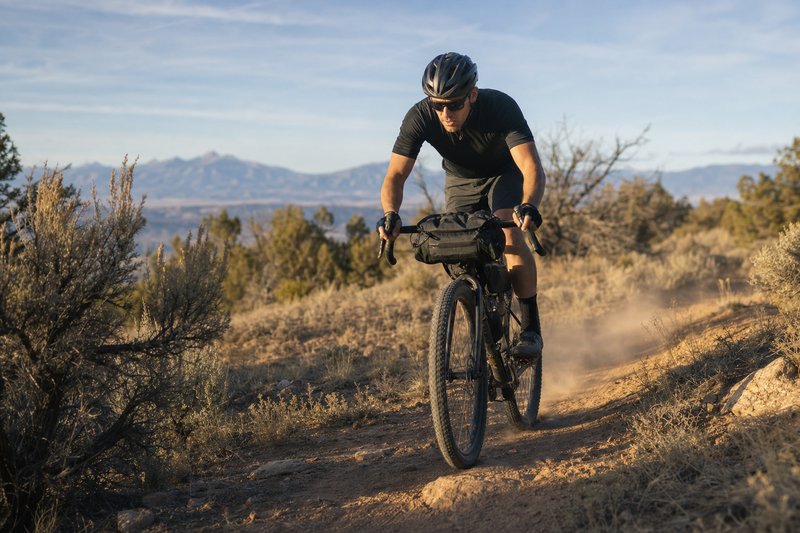
A bikepacking setup isn't a smaller version of a touring rack-and-pannier rig — it's a completely different way of thinking about where weight goes. Get the placement right and a loaded bike still handles like your bike. Get it wrong and every descent feels like it's fighting you.
Three bags, three jobs
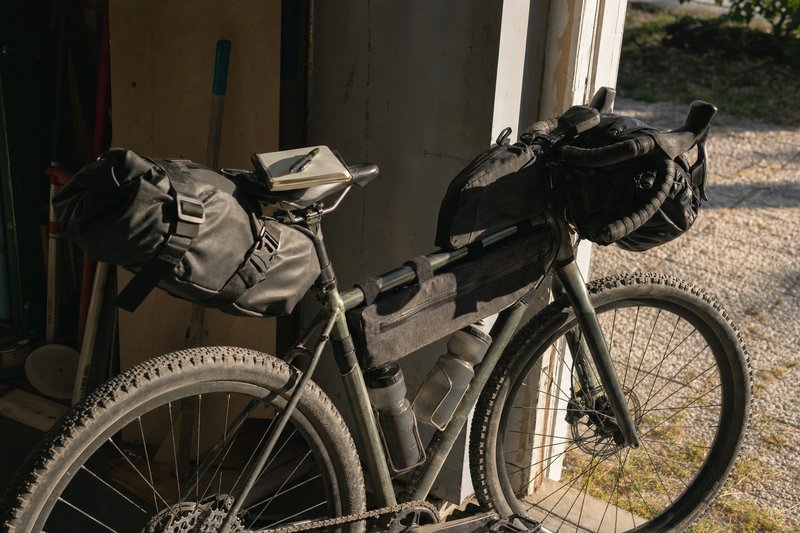
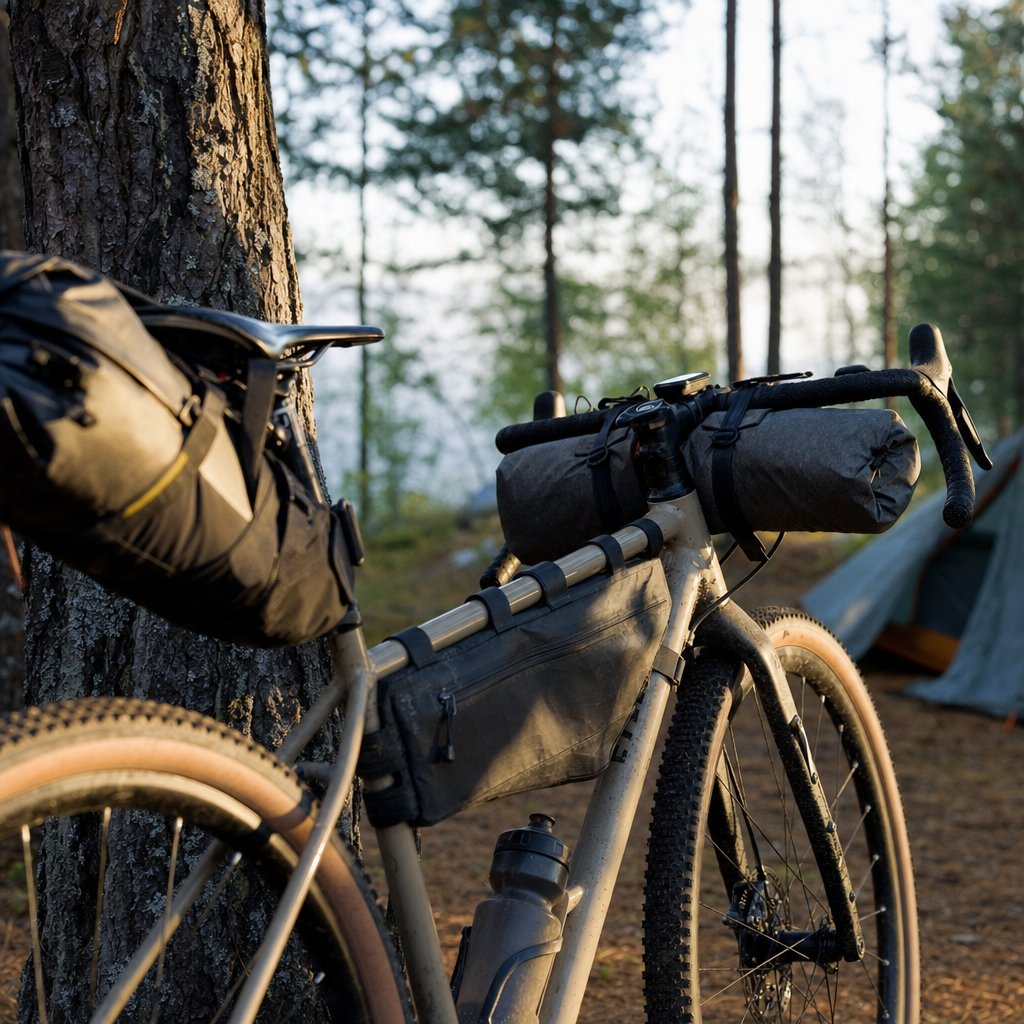
A seat pack, a frame bag and a handlebar roll cover almost every first setup, and each one has a role it's actually good at rather than just "somewhere to put stuff."
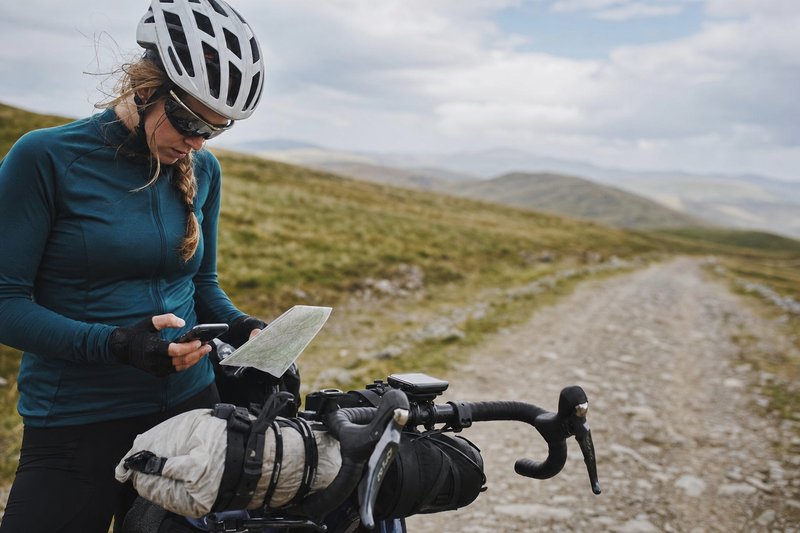
The frame bag sits low and central — the best place on the whole bike for anything heavy (tools, a stove, a battery pack), because it barely changes how the bike balances. The seat pack holds bulky, light things — a sleeping bag, spare clothes — since weight that high and that far back gets noticeably worse the heavier it is. The handlebar roll is for whatever you want without unpacking: a jacket, snacks, a tent that goes up and down every day.
The bags that fill the gaps
Once the three main bags are full, a few smaller add-ons solve specific annoyances rather than adding real capacity. A top-tube bag mounted just behind the stem keeps a phone, snacks or a battery pack within reach without stopping — useful enough that most riders add one before anything else. A pair of cargo cages bolted to the fork legs extends carrying capacity for a bulky item like a tent or extra water, and they're a cheap way to add space to a frame that's short on mounting points elsewhere. None of these are required for a first trip, but they're usually the first upgrade people make on their second one.

The weight rule that actually matters
Heavy and low beats heavy and high, every time. If something is dense — tools, food, water — it belongs in the frame bag or low in a pack, not strapped on top of the handlebar roll or perched on the seat pack. A bike that feels twitchy or vague on a loaded descent almost always has its weight in the wrong place, not too much weight overall.
The three things everyone overpacks: clothes "just in case," a full cooking setup for a one-night trip, and tools for repairs they don't know how to do anyway.
Test it before you actually need it
Load the bike exactly as planned and ride around the block, then up whatever hill is nearest. Anything that rattles, rubs a tire, or makes the bike feel unstable standing up out of the saddle needs fixing now, not forty miles into the actual trip. This five-minute check catches almost every setup mistake before it matters.
Do the same check again after the bike's been loaded and unloaded a few times over the following weeks, not just once before the trip. Straps loosen, bags settle into slightly different positions, and a fit that felt right in the driveway can shift after a couple of real rides — worth another quick lap around the block the week before departure, not just the first time.
A couple of things people ask
Do I need all three bags for a first trip?
No — a seat pack alone covers a lot of one-night trips. Add the frame bag when you start carrying tools or water beyond what a bottle cage holds, and the handlebar roll when you need a sleeping bag or tent along too.
Can I use panniers instead of bikepacking bags?
On smooth gravel or road, yes — panniers carry more and cost less to start with. Off proper singletrack, their width and the way they hang low make them catch on things a slimmer bikepacking setup won't.
How do I stop bags from rubbing the tire or swaying?
Most rubbing and sway comes from underfilled bags rather than overfilled ones — a seat pack or frame bag that isn't packed firm enough shifts around as you ride. Compress every bag as tight as its straps allow, even when it isn't full, and recheck the fit after the first few miles once things have settled.