Gears exist to solve one problem: your legs work best spinning at a fairly consistent pace, but the ground you're riding on constantly changes how hard that is. Shifting is just choosing a different gear ratio so your legs can keep doing roughly the same thing.
What actually moves when you shift
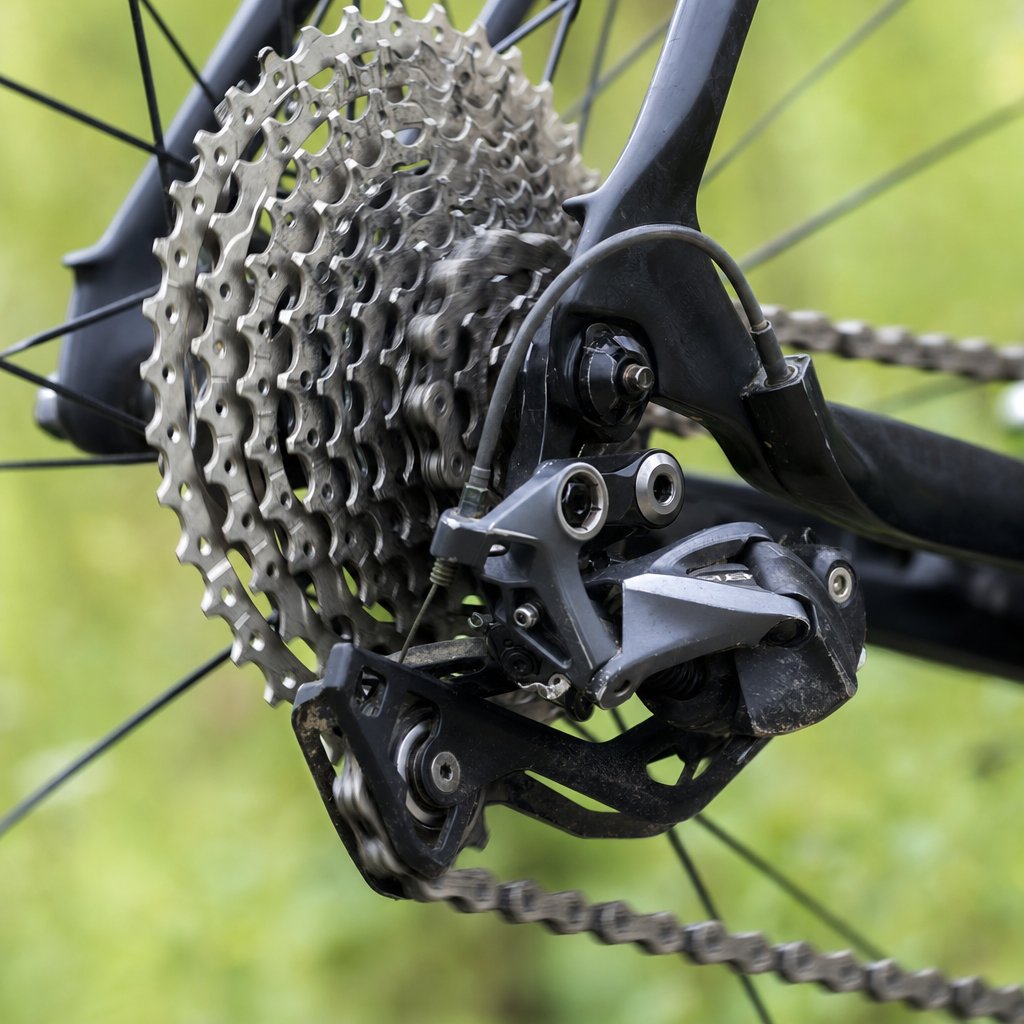
A derailleur doesn't grab the chain and force it sideways — it nudges the chain just enough that it derails off one sprocket and re-catches the next one as the chain naturally moves. That's the whole mechanism: a small guide, precisely positioned, timed to a moment when the chain is already moving.
This is why shifting under heavy load — mashing the pedals up a steep climb — feels and sounds worse than shifting with light pressure. The chain has to be moving off the old sprocket while you're asking it to; fighting that with maximum force is what causes the grinding noise and the occasional skipped shift.

Why lower numbers feel easier
A "low" gear pairs a small chainring at the front with a large sprocket at the back — the chain travels a shorter distance for each full pedal stroke, so each stroke moves the bike less but takes less force. A "high" gear does the opposite: more distance covered per stroke, more force required. Neither is better; they're tools for different gradients and speeds.

Shift before the climb gets steep, not once you're already struggling on it — the derailleur works better with a light pedal stroke than a desperate one.
Why shifting sometimes just doesn't work
Almost every "my gears won't shift properly" complaint traces back to cable tension. Cables stretch slightly over time, which throws off the derailleur's calibration bit by bit — the fix is usually a small barrel-adjuster turn, not a full tune-up. If shifting has gotten vague or hesitant gradually rather than suddenly, that's the first thing to check.
Electronic shifting changes what can go wrong, not the underlying idea
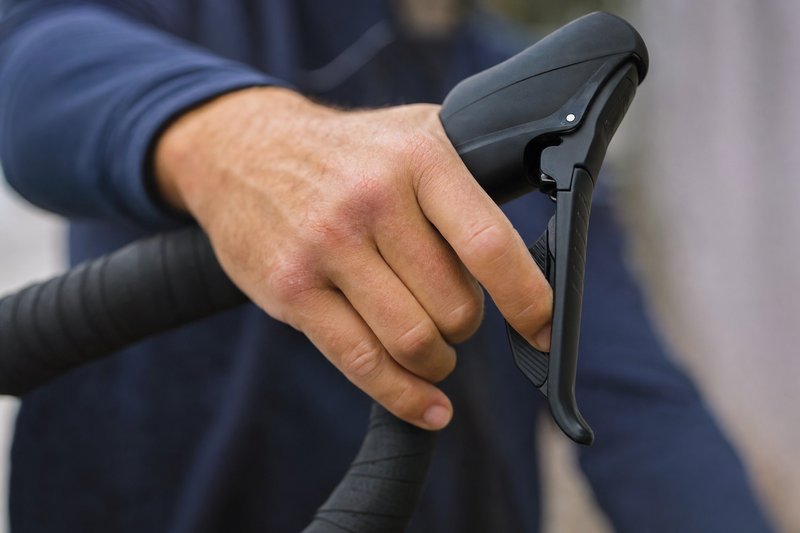
Electronic derailleurs (a small motor moving the cage instead of a cable pulling it) still work on the exact same principle — nudge the chain at the right moment so it re-catches the next sprocket. What changes is precision and consistency: a motor holds the same calibrated position every time regardless of how the cable has stretched, which is why electronic shifting tends to stay accurate for far longer between adjustments than a cable-actuated setup.
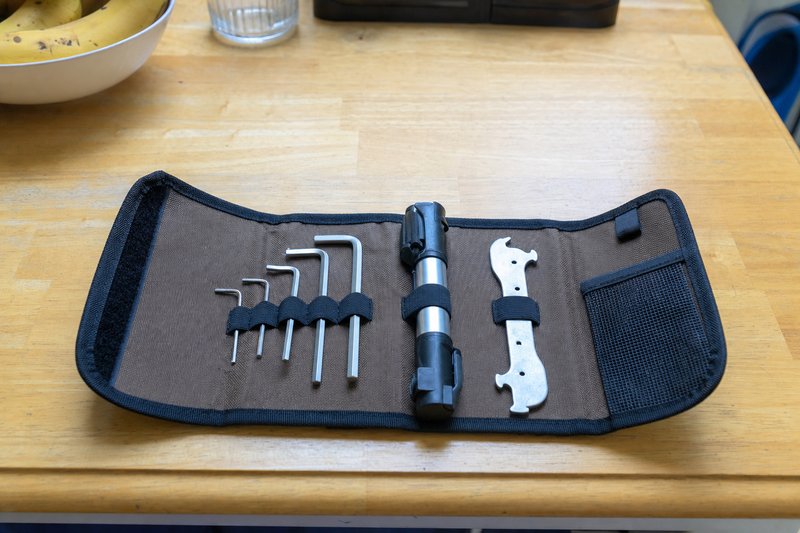
It doesn't eliminate maintenance, it just moves what needs attention — a battery that needs charging, firmware that occasionally needs updating, and a system that's genuinely harder to diagnose or adjust yourself on the road without the right tool or app. Cable shifting's real advantage is that almost anyone with a screwdriver and a bit of knowledge can adjust it anywhere; electronic systems trade that field-repairability for consistency.
Avoid the diagonal extremes — that's cross-chaining
Big chainring at the front paired with the largest sprocket at the back, or small chainring paired with the smallest sprocket, forces the chain to run at a sharp diagonal angle instead of roughly straight. It still works, technically — the bike moves — but the chain rubs against the front derailleur cage, wears faster, and runs less efficiently than a straighter equivalent gear elsewhere in the range.
Most drivetrains have some overlap, meaning a middle-of-the-range gear on the small chainring often gives you almost the same ratio as a middle-of-the-range gear on the big chainring, but with a straighter chain line. If your chain seems to rub or make a faint dragging noise only in your highest or lowest gears, that's the cross-chaining angle, not a sign anything's broken.
A couple of things people ask
Why does my chain make noise in certain gears?
Usually the derailleur is slightly out of alignment for that specific sprocket — a small barrel-adjuster turn (a quarter turn at a time) while pedaling in that gear will often quiet it.
Is it bad to shift while not pedaling?
The derailleur can't move the chain onto a new sprocket without the chain actually moving, so shifting while stationary just doesn't do anything useful — it's not damaging, it's just ineffective.
What's the difference between a 1x and 2x drivetrain?
A 2x setup has two chainrings up front plus a front derailleur, giving a wider total range split across two overlapping halves. A 1x setup drops the front derailleur entirely, relying on a single chainring and a wide-range cassette — simpler and lighter, with one less thing to adjust, at the cost of bigger jumps between gears.
Why does the front derailleur feel clunkier than the rear?
The front derailleur is moving the chain across a much bigger jump in ring size, using a cage that pushes the chain sideways rather than guiding it onto the next sprocket as it passes. It's a cruder mechanism by design, which is also why easing off the pedal pressure matters even more for a clean front shift than a rear one.