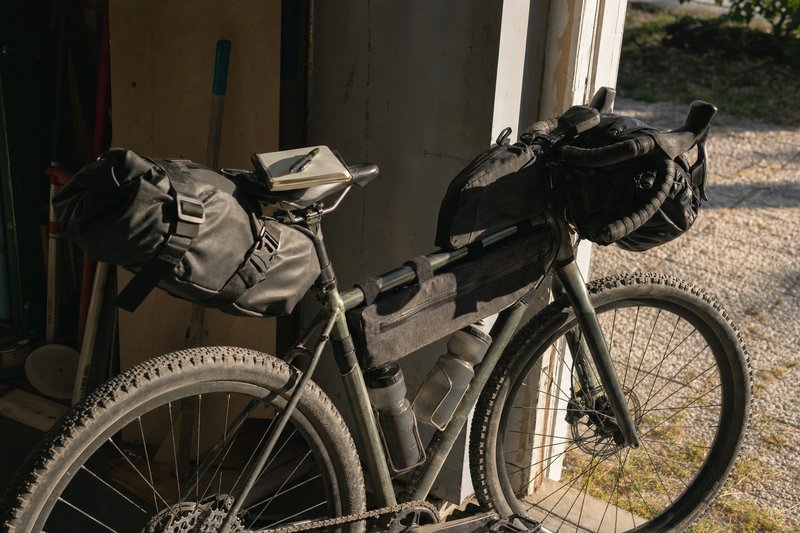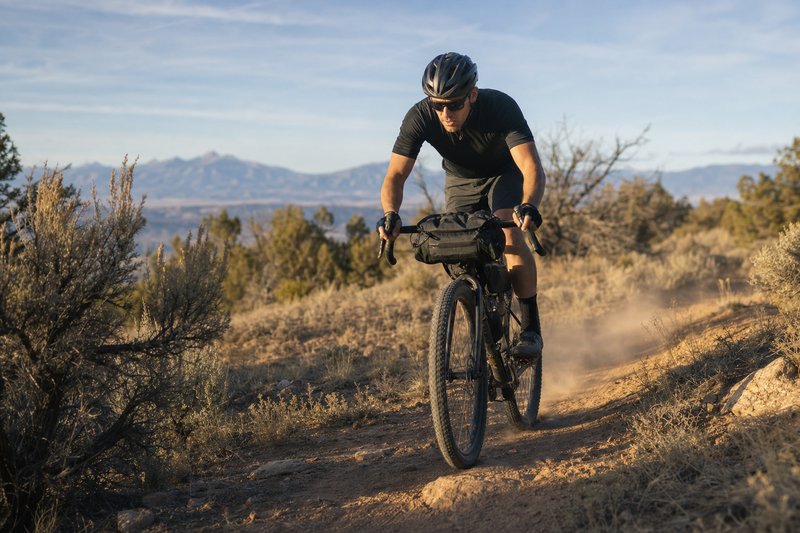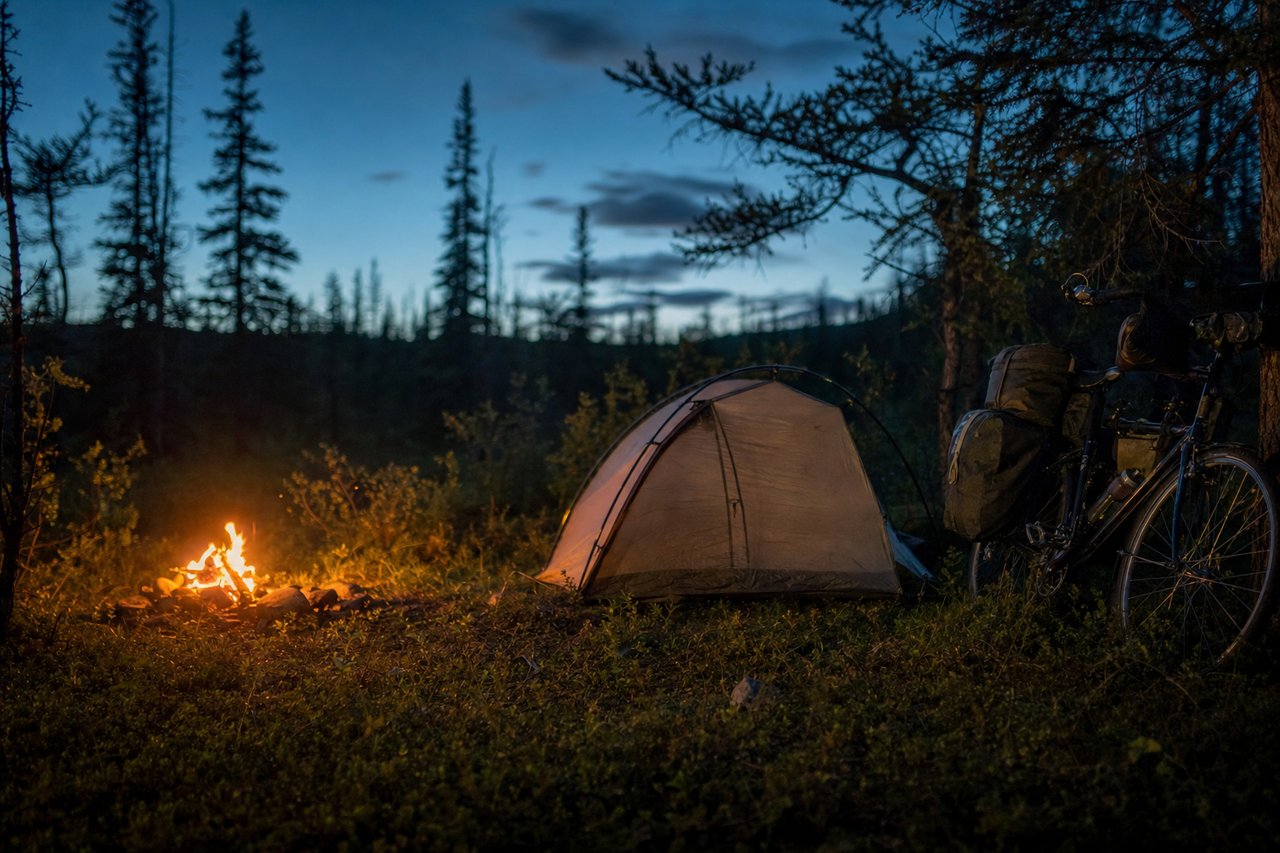
Bike camping is bikepacking's quieter cousin — less about covering distance, more about riding somewhere pleasant enough that camping there is the actual point. The skills overlap almost completely; the mindset is where they differ.
Riding to camp vs. camping to ride
A bikepacking trip is usually built around the route — the camp is where you stop because the day's mileage is done. A bike camping trip flips that: the destination is a specific spot worth spending an evening at, and the ride there is deliberately short enough to leave a proper afternoon and evening once you arrive.
That difference changes what you pack. Bring the good stove, the comfortable chair, the book you won't read at 6pm after climbing all day — bike camping has room for the extra kilo bikepacking doesn't.
Finding somewhere to actually camp
Rules on wild camping vary enormously by country and even by region within one country — some places allow it broadly, most require a landowner's permission or restrict it to specific zones, and a few forbid it outright. The one skill that makes every bike camping trip easier is doing that homework before you leave, not after you've ridden somewhere and found a "no camping" sign.
Booked campsites remove the uncertainty entirely and are the simplest way to start — many now cater specifically to cyclists with secure storage and a pitch near the gate, which matters more than it sounds once you've wheeled a loaded bike across a dark field at 9pm.
Choosing a route worth the short ride
Since the ride itself is deliberately short, the route can afford to prioritize scenery and a good camp spot over efficiency in a way a longer bikepacking route can't. Quiet lanes, canal towpaths and gentle bridleways all work well — the goal is arriving with energy and daylight left, not arriving exhausted right as the sun goes down. Scouting the last mile or two in advance, even just on a map, is worth the five minutes: the difference between a lakeside pitch and a roadside verge is often just knowing which turn to take.
The extra kilo of gear you'd never bring bikepacking is exactly what makes a bike camping evening worth stopping for.
Where it feeds back into bikepacking
Every bike camping trip is practice for a longer one — pitching a tent in the wind, cooking in the dark, packing up efficiently in the morning. Do it enough times somewhere low-stakes and close to home, and a multi-day bikepacking route stops being intimidating; it's just this, repeated.
It's also the easiest way to test gear before it matters. A stove that's fiddly to light, a sleeping pad that's not warm enough for the season, a tent that takes twenty minutes to pitch in the dark — all of these show up on a bike camping trip a mile from home, where the fix is a short ride back rather than an uncomfortable night with no alternative.
Going with other people
Bike camping is often more approachable as a group activity than bikepacking proper, since the short distances mean nobody's fitness dictates the whole day's plan. It's also a low-pressure way to introduce someone to loaded riding for the first time — a few hours on a familiar route with a comfortable camp at the end tells them more about whether they'll enjoy a longer trip than any amount of talking about gear would.

A couple of things people ask
Do I need a "bikepacking tent" for this?
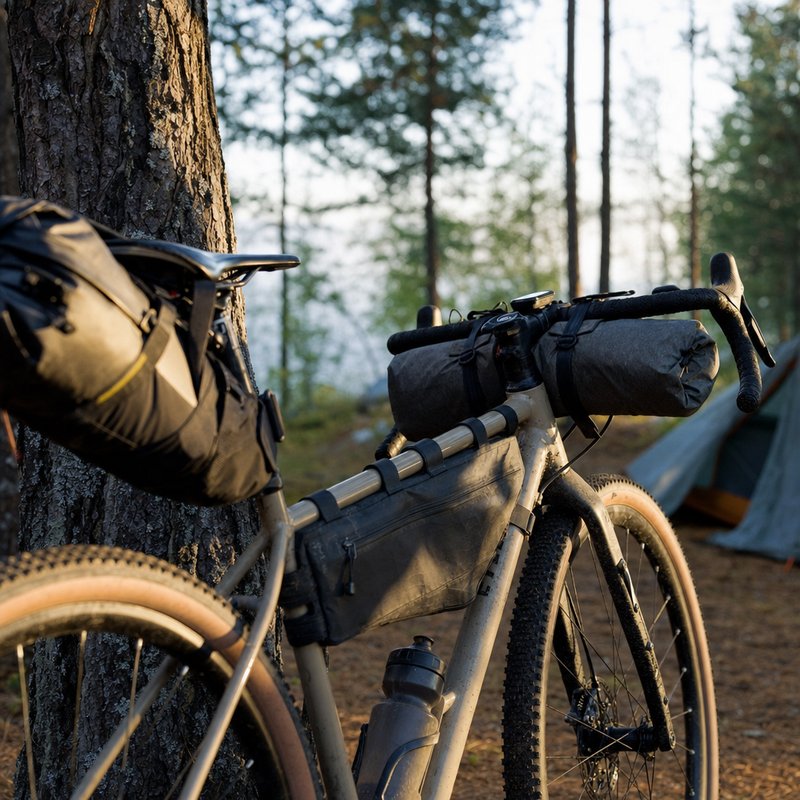
No — any lightweight backpacking tent works fine strapped to a handlebar roll or seat pack. A dedicated bikepacking tent just tends to pack into a shorter, fatter shape that fits a handlebar roll more neatly.
Is wild camping actually legal where I want to go?
Check the specific local rules before you go, not general advice from elsewhere — permitted wild camping in one country or region can be trespass a short distance away, and the rules genuinely differ that much.
How far should a bike camping ride be?
Short by bikepacking standards — often just an hour or two each way. The point is leaving enough of the afternoon and evening free to actually enjoy the camp, not maximizing the day's mileage.